Impasto – Painting with a knife

Yes! That is the term used for a painting technique – ‘IMPASTO.’ Impasto technique in simple words is painting with a knife. A painting knife is different from a regular knife. The blades come in different shapes and sizes to create different textures. You could relate better if I named a famous artwork created with this technique – ‘Starry Night’ by Vincent Van Gogh.

Impasto technique is commonly used in paintings of the ‘Abstract and Impressionist styles’. Instead of using a brush to apply paint on the canvas, we use a knife. It is a metal piece (flat) not exactly sharp but more of a shaping tool with a wooden handle. We can create a variety of textures using it. The texture created will depend on the pressure applied and how the knife is held by the artist.
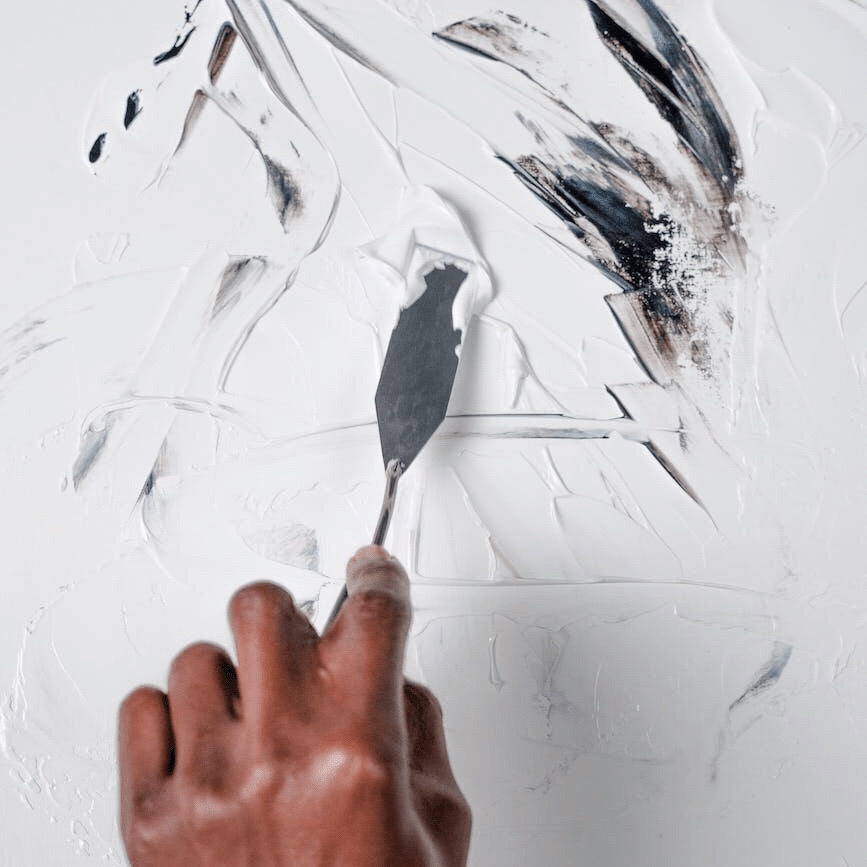
Showing textures of Impasto
Holding the Knife to Paint

Hence, the texture created by two different people using the same materials can be different. The method of application is what matters. This method is not exactly taught. The artist must try different strokes to see which one he/she is most comfortable doing. Like they say each one of us has that one special movement in which, only we can do best.
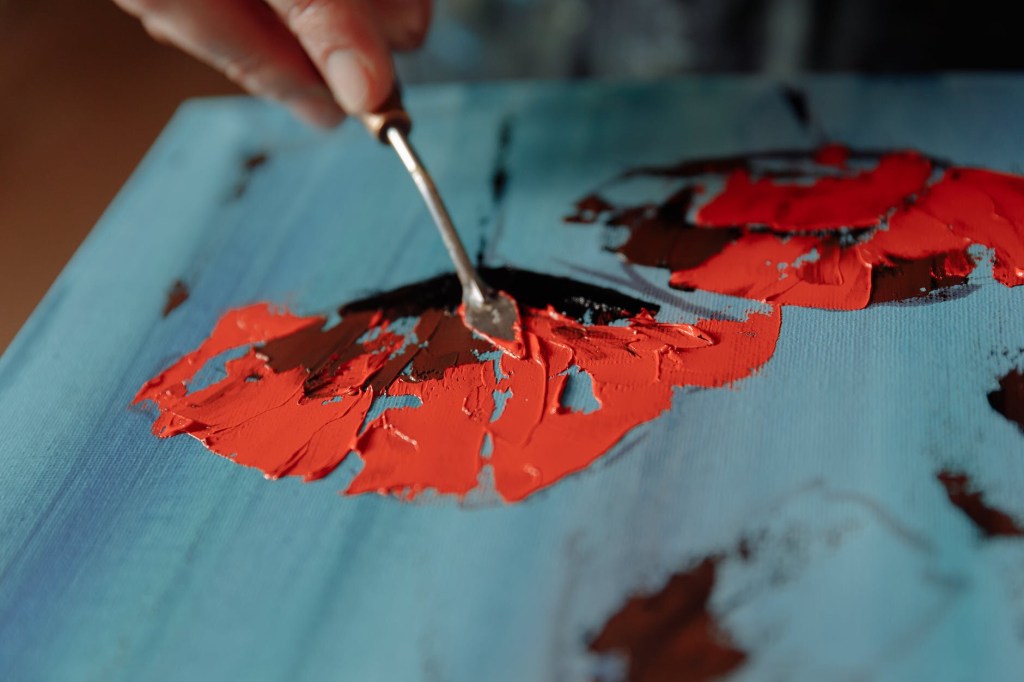
Demonstrating the Impasto method
Painting on the canvas

Initially, when I learnt this method during school days, we referred to it as ‘texture painting.’ This term expands the scope to use other tools for application to create textures with paint. For example, we can use the blade of a cutter or a simple piece of ply laminate. These can be sharp, so please be careful while using them. Ever noticed a worker applying a white base (putty) or cementing the cracks in the wall?
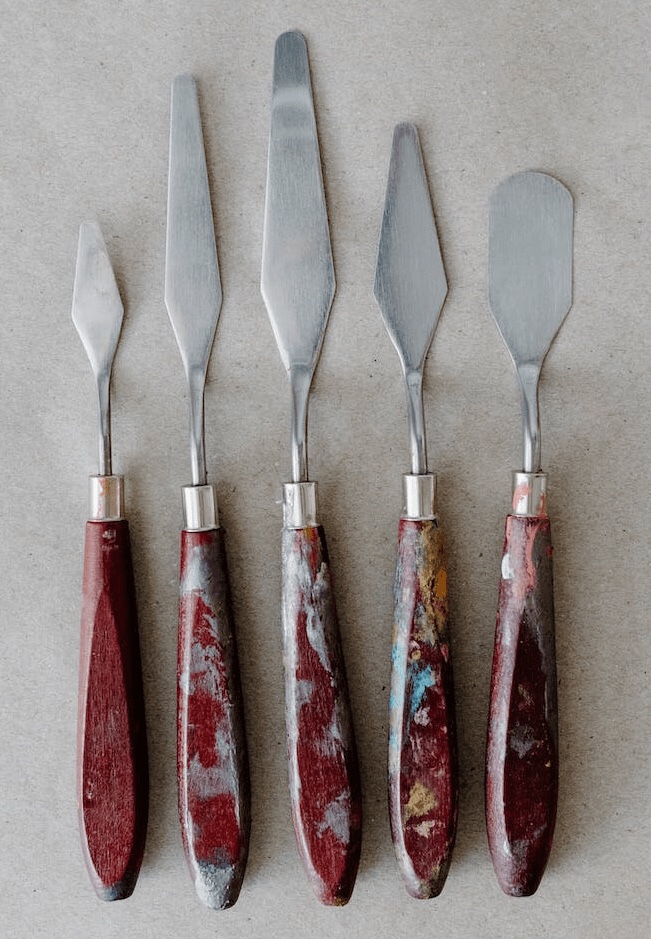
Variety of Painting knives
Different blades of painting knives create different textures

I know, to be safe please use knives and not these other things. All I meant was that we can create textures with anything, even combs. It’s like the application of icing on the cake. In this case, think of paint as the icing that we are using. I gave that connection on purpose. The consistency or feel of how the paint should be for a good output can be understood through this connection- soft, quick drying and thick.

Painting with a Knife

This painting technique gives a 3D-like output. There is no need to paint various layers. We only need to give a background colour to the canvas and then we can paint directly on it. Impasto is originally done with oil paints. But it’s expensive and takes very long to dry. I have tried this method with gouache paints (on paper) as well as acrylic paints (on canvas). Both work very well in their way. The paint dries quickly and the artwork can be completed in one go. We also get various mediums that we can add to acrylic paint in order to enhance this work.

My Painting using the Impasto Technique

Textures can also be created with ‘Guesso’ at the beginning for the background and then painted. However, most of the time we just directly apply a nice rich thick coat of paint directly to the canvas. Please note, this method uses a lot of paint. So make sure you are stocked up with enough paint in the colours that you need. The exact amount depends on the artist’s usage but the amount of paint that is used in a painting with this method is almost 3-4 times more than a regular method.

A trending art that uses this technique but with different material is ‘Russian Sculpture Art’ or ‘Russian Sculpture Painting.’ Readymade ceramic pastes in various colours are available in the market. These are used to make florals. Do check this art on the internet if you heard it for the first time. It isn’t exactly sculpting but it uses ceramic paste with the painting knives.

Try different textures on small pieces

And finally, where will I get these knives? In earlier days artists would make their knives but we are in the modern world now, right? That means it is available at almost all stores selling art material. It is also called a ‘palette knife’. It is barely sharp enough to cut the paint. So even children can use it under their parent’s or teacher’s supervision. Go ahead and try a new technique of painting this week! Have an Arty Week ahead!
Selecting Art Materials : Canvas and Paper, Paintbrushes

Most of the people I know buy brushes that are labelled as watercolour brushes and art paper that is mentioned as suitable for watercolour at the store and they are sorted. “Look! the company says I can use them for watercolour painting, so I bought them.”

They bought it either because someone told them, they saw someone using it or the brand company had written so on the product. Very few people bother to find out the product details and know if it is the right product for their use. Many a times we don’t want to stock different materials for different Art and so we use the same brush or paper for all. The selecting pattern is same for them and so I grouped canvas and paper with paintbrushes.

For beginners it really won’t matter; however artists and professionals will be equally choosy or selective about these materials. It makes a difference in their work and once we are used to a particular one, we only use that. Most artists start off with the trial and error method and once they like a particular brand or product, they stick to it.

Different kinds of brushes, what they are called and their suggested uses are printed on packs. As always a lot of information is available on the Internet. So I will not get into repeating that printed knowledge.

We have discussed ‘Selecting Art Materials’ in our previous posts. On the same lines I will share about selecting paintbrushes, art paper and canvas in this post. I do not endorse any brand and this is not an advertising or promoting post. I share about my understanding of these materials so that it helps others make an informed purchase decision.

Canvas
Selecting a Canvas

Canvas

Any surface we paint on is called the canvas. So if we are painting on fabric or wood or paper, all of them are actually our canvas. However when we go to an Art store and ask for a Canvas we usually get this fabric like drape wrapped on a board called BOARD Canvas, a stretched drape pinned to a wooden panel frame called STRETCHED Canvas and a ROLLED Canvas which is a roll of the drape. All three have the same material, only the mounting is different. Once the painting is complete we have to get it framed before hanging the painting on the wall.

The board canvas is a hard and flat painting surface, the stretched canvas is mounted on a frame and has a slightly bouncy feel while the roll canvas more floppy like a loose fabric. A stretched canvas can be directly hanged on the wall using the existing wooden frame. Hence it is also called wall mounting canvas. A canvas sheet that is cut from the roll will have to be stretched or mounted before painting.

Canvas was traditionally used more for oil painting. Earlier when I learnt mural painting we would have to apply oil and colour to prime the canvas. Now a days canvases are already coated and primed. Cotton is the main fibre of a canvas. Did you know? We also get paper sheets made from cotton linen pulp which are used as canvas for oil painting and acrylic painting. They are like a sheet cut from roll canvas: have the same texture and feel but are relatively sturdy and stiff like paper.

All of them will be acid free and primed and have some treatment or coating for protection against pests. It really won’t matter which one you buy, almost similar. Only the tension of your canvas will differ. That would be the basis of your selection. If you are using them for acrylic painting a canvas primed with gesso works well. You can use others too. If you are into oil painting you may be more selective while choosing the canvas.

Not all art supply stores stock all sizes of canvas. It is a good idea to buy the quantity together if your project uses multiple canvases. In case the size you need is not market ready, you can buy the roll canvas and get it custom made or mounted to your required size. Canvas is also used for Art prints. Digital prints of artwork is quite common. Flex banners are also a type of canvas.

Paper
Selecting Art Paper

Art Paper

We get sheets of art paper in bundles as well as bound in books. Books have perforated sheets which can be pulled out. Smaller sizes such as A4 and A5 sketchbooks are very popular and will be easily available everywhere. Art Paper is used for all mediums including pen drawing, pencil shading, acrylic painting, pastels painting, charcoal sketches, watercolour painting and oil painting.

In the info section they print the size in inches and cm. They print the thickness in ‘GSM’ or lbs. GSM stands for grams per square metre that is the weight of the paper or pulp for every square meter. It is how the thickness is measured. How does that make a difference? The thickness of the paper is an important attribute because for watercolour painting we need thicker sheets like 250-300GSM that will absorb water but will not tear while for ink art we can work with 120-180GSM.

Next we look for textured or plain. The grains on the surface. Depends on the artwork one is working on, whether they want a textured feel (a rough surface) or a plain background. For pastels and charcoals a little grain or texture is required. It helps hold the powder while for ink and watercolour art a smooth or plain surface can be selected. This gives a plain edge or a straight neat line finish while painting.

Artists usually use ‘acid free’ meaning paper that has been neutralised. In simple words if the paper is acid free it will not turn yellow with pitting and can be preserved longer. Paper made from cotton will have more absorbency for water based painting. It can be 100% cotton or mixed with other natural fibres like cellulose. I select the ones with 20-30% cotton for my artworks.

Paintbrush
Selecting Paint Brushes

Paintbrushes

Selecting paintbrushes is very simple. Each of them are built as such for a purpose or for a particular style of painting. It may sound weird but some artists manage to get fine lines with a thick brush of size 8 and a thick like with a brush of size 4. With years of practice we don’t change brushes for each size. So buying them in odd numbers like 0,2,6,8,10 is enough. For finer lines and intricate work I use finer brushes of size 0, double zero 00 and triple zero 000. These are smaller or finer than zero size brushes.

For painting on a canvas on the easel we require long handle brushes. Regular size handles are good when we are working on paper. Further we would need a mix of round and flat brushes in our art tool box. Flat brushes are used to paint backgrounds, round brushes for fills and riggers for fine lines. Filbert brushes are useful for one stroke painting or creating visible strokes and design. I even use the back of the brush handles as round stumps for dot painting.

Brushes can be made from natural animal hair or synthetic fibres. Use brushes with soft thin bristles when you want the colour to be applied evenly. It gives a smooth neat finish. Thick bristles cause an uneven finish with lumps of colour which can be left as it is or smoothened by using a roll over it. Bristles of brushes made from natural hair expand when soaked. They are best suited for oil painting. For painting using acrylic and watercolour paints we can use brushes made with natural or synthetic bristles. Watercolour and Acrylic, both being water based paints we can use a common set of brushes. No need to keep another set.

One special kind of brush is the water tank brush. This brush has a plastic body with a water tank attached to it and bristles of the brush are synthetic fibres. When we press the tank, the water drips to the brush tip and soaks the bristles. It works very well for quick sketches and on the go painting using watercolour cakes.

Paint Brushes
Just bought new Paint Brushes

I was surfing the Internet the other day when I came across a video titled ‘How it’s made – Paint Brushes?’ ‘How it’s made’ is a very popular show and I like watching it. They show how various products of our daily items are made. Helps us understand about the products, their usability and the thought process of the maker in creating it.

I understood which problem faced by artists are they trying to solve by offering a particular type of brush or why it is made the way it is. Every product is manufactured keeping in mind a certain use. Similarly they also have videos on ‘How it’s made’ for canvas, paper and many more products. If possible do take out some time and see them.

Painting
Selecting Art Materials

Links to posts related to this topic are listed below. Click on the title to open the post in a new tab. Have an Arty Weekend!

Why is Acrylic Paint the most preferred medium to paint?

If there was something like a ‘People’s Choice Award’ or an Award for the ‘Most Popular Paint’, I am sure it would go to Acrylic Paints. While the others are more natural dyes and colours, Acrylic Paint is synthetic and man made. It is easily available at stores selling Art Supplies as well as all Paint and Stationery Shops.

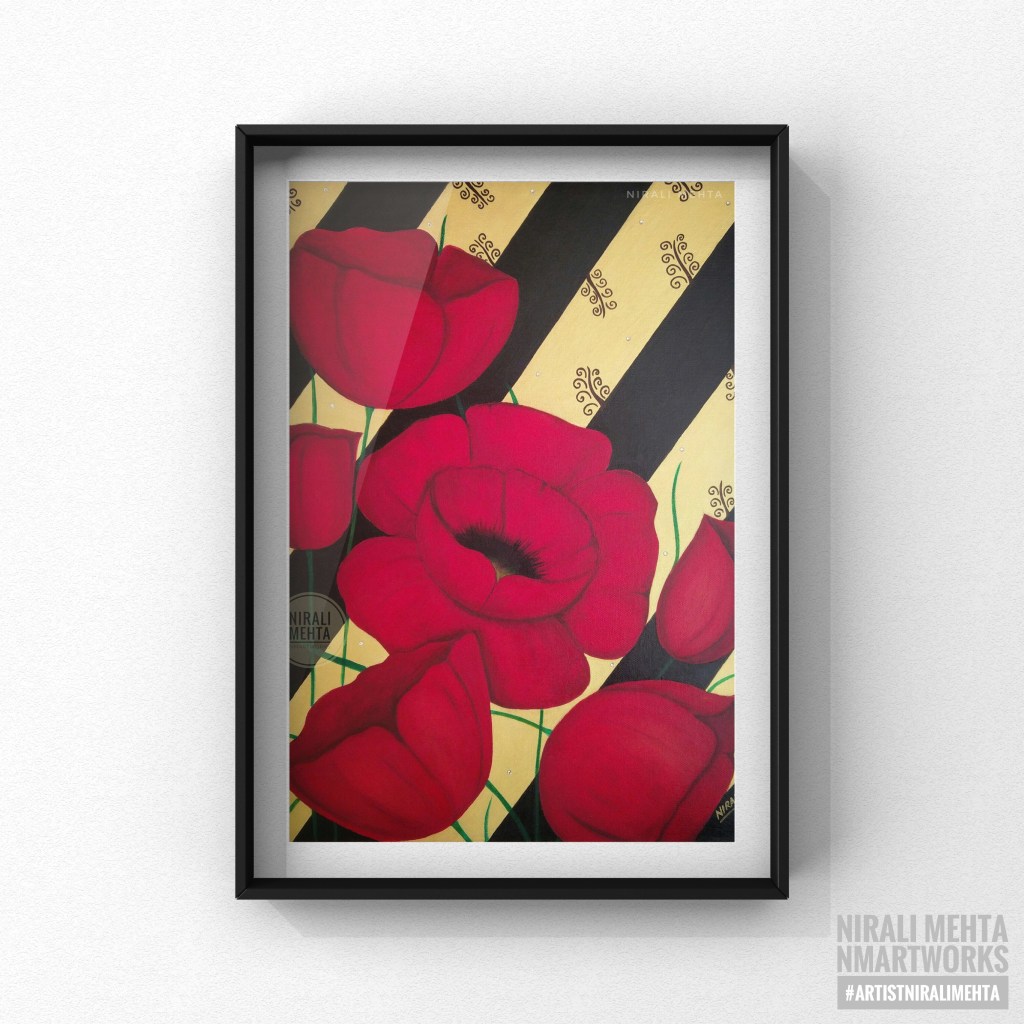
Acrylic  Painting  Poppy  Flowers
Poppy Flowers – An Acrylic Painting that I have done

Acrylic Paints vs. Oil Paints

Oil Paints take 7-10 days to dry completely. It is this quality of oil paint that helps in mixing colours and blending them. Any artist who has worked with oil paints will agree, it is this property that really helps in making those realistic paintings.

Oil paints have one major drawback ; by any chance if any little traces of water get trapped between the colours because of humidity then the painting develops moss. Refurbishing, Repairing or Repainting- nothing works.

Oil Painting  on Canvas
Indian Mural Style Oil Painting. The ornaments are modelled from clay

When beginning a new oil painting, the canvas needs to be seasoned (sizing) to absorb oil. The more oil it absorbs the better finish. Whereas for Acrylic Paints we only need to use ‘Gesso’ to prime the base. Gesso is like a paint which when applied to any kind of surface prepares it for the paint to be applied. Last but not the least having a glass frame and making the frame airtight ensures that the Oil Painting stays well for longer. Acrylic does not have any such requirement.

Brushes and Palettes can be cleaned with water. If we get some paint on our hands or any surface while painting, it can be easily cleaned with water or removed with acetone. It usually petals off like a plastic coating. We all know that is not the case with oil paints. We need to keep a separate set of brushes for Oil Painting which cannot be used for anything else. On the other hand it is possible to have a common set of brushes for Watercolour and Acrylic Painting since both are water based paints.

Acrylic Paints vs. Watercolour Paints

It is possible to achieve a Watercolour like finish using Acrylic paints. We can mix the colour with different mediums such as Gel, Gloss, Matt, Pearl and so on to get different effects. We can create textures and even achieve the level transparency we want in the colours of the painting with Acrylic Paints.

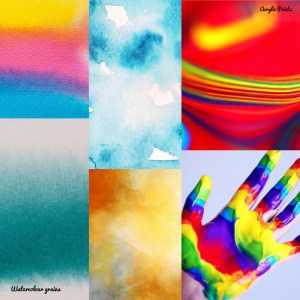
This image is created from stock photos for explanation

Watercolour is basically for Painting on paper. Even after a painted layer dries, water can be used to mix or blend both colours. Water can be applied on the paper and then colour drops can be added, giving this grains effect. This painting method is suitable to Watercolours. So most artists specialising in Watercolour Painting will not want to use Acrylic Paints. Watercolours are also easy to work with, portable and can be carried along. The cake form is very compact and portable. Mixing of colours to get your shade is easily workable.

I use a mix of Watercolour and Acrylic Paints for my paintings listed on the shop for sale. You may visit my Etsy Shop or Social Media pages to see those.

Here are some of the reasons I think this Acrylic Paint is preferred equally for both Arts and Crafts :-

1) It has a unique property. It is soluble in water and hence diluted with water to paint. However once the paint dries the polymers bond to give a water-resistant painted surface.

2) Acrylic Paints can be used to paint on multiple surfaces including Canvas, Paper, Wood, Glass, Walls, Ceramic and Fabric. I have personally tried them on all of these. We need to seal the completed work with varnish and we are good to go.

Recycled Pen Stand Acrylic
Recycled this old plastic container by repainting with Acrylic Paints

3) We can select the consistency of the paint. The Acrylic Paints that are available in Tubes have a slightly thicker consistency as compared to those available in bottles. The ones in the bottles are liquid like pouring consistency. Both are Acrylic Paints and can be used together on all the projects. The pouring consistency colours work well for projects like Dot Painting and Fluid Art.

Recycled Roll up Brush  case
Roll up brush case I made from my old jeans. Dot painting with Acrylic Paints

4) These paints are available in smaller tubes of size 9ml to larger tubes with 40ml to 120ml. Also available in bottles and larger cans. We even get Acrylic Sprays. Art and Craft Schools and Studios can stock large containers while people who do one off projects can buy the smaller ones. Further if we run out on a particular shade, we can buy just that single shade too!

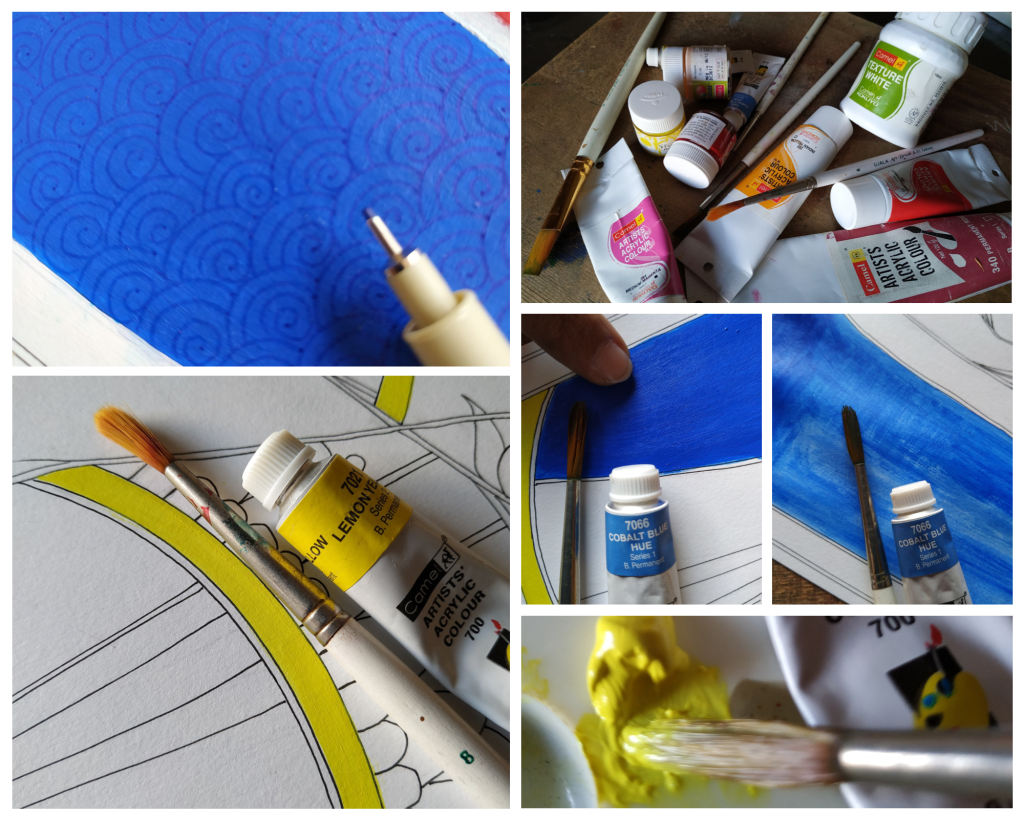
Photos of my Acrylic paints
I use Artist quality Acrylic Paints by the brand ‘Camel’ or ‘Camlin’ because of its easy availability and reasonable pricing locally.

5) Water Resistant surface makes it easy to combine it with other art materials such as permanent markers or watercolours. Acrylic colours can be used on watercolour painted surface but not the other way around because for watercolours to work, the paper needs to absorb the water. Acrylic paints make the paper impermeable. Acrylic paints can be used alongside or as highlight on watercolour painted surfaces.

6) Acrylic Paints are preferred for creating textures. An artist can achieve the effect he wants with the colours – solid thick, translucent or transparent finish, all by mixing different quantities of mediums and/or water. It is like painting in layers. The bottom layer dries completely and then we paint the next layer. We can even paint a white on a black without the previous layer smudging at all.

Knife painting on canvas
A closer look and method for Knife Painting with Acrylic Paints

The fast drying property and thick paint consistency make it suitable for Impasto or Knife Painting. By using these methods of painting artists can create a good variety of textures. We can use ‘retarders’ to slow the drying process and increase the working time for blending.

7) Almost anything can be painted with Acrylic Paints. These paints can be used for Painting on pots, Painting Clay, Canvas Painting, Painting on Paper, Painting on T-Shirts and Tote Bags, Pebble Art, Wall Murals, Painting on Glass and Mirrors, Painting on Tiles, Mixed Media and a lot more variety of Art and Craft Projects.

Mixed Media on Canvas
Mixed Media Acrylic Painting. Flowers are modelled from clay

8) These colours remain unaffected by humidity or extreme cold or heat conditions.

9) Framing is optional. Hence we have wall mounting canvases. To clean it simply take a dry brush and lightly dust of the dirt that may have settled on it and it will be clean.

Wall mounted  Impasto Painting
Wall Mounted Canvas – Knife Painting using Acrylic Paints

10) Variety of Colours and Shades. Mixing colours might not be a good idea because it dries very fast. So buy them in the colours or shades needed. There will usually be a whole shelf dedicated to it. Any colour that we need can be bought anytime. We get neon shades and glow in the dark paints too!

The only drawback with Acrylic paint is that the colours will dry out if the water from the colour evaporates or if the bottle is left idle, so cap them well. Remove the colours in disposable containers in the required quantities instead of painting directly from bottles and leaving large containers without the lid for long hours of painting.

Acrylics are easy to work with. Rectifying a mistake is also easier when using Acrylics, so it works well for beginners as well as professionals. I really don’t know what more can they offer to make these paints better. Definitely worth buying a box and trying out some Art projects. I have shared some of the recent Projects that I have worked on using Acrylic Paints. All these are still with me and not for Sale. The paintings for sale on the shops are different. These are all from my personal collection.

Have an Arty Week!