How to say that? It is ‘Silu -et’. That’s right! I am not talking about a soft fabric but a technique of painting. Silhouette is also a popular method in photography. It is an object or profile in dark black against a very bright source of light, usually the Sun.
To understand it better, do a small experiment. Take a camera and try clicking pictures of any object with the Sun at Sunrise and Sunset. The object will always come dark. On the other hand if you click in the other direction where the Sun illuminates the object, we get a crisp clear photo with details of the object. That is why they say don’t click against the Sun. Unless of course you want the special effect.
A example of how the photo will be – Image from WordPress Photo Library
The reason is the immense brightness creating a contrast with the object. Thus the object appears completely black or dark with only an outline or profile. A distinct shape of the object will be seen. This is called a Silhouette. Sunrise and Sunset are the perfect backgrounds.
It is a very simple method for painting and can be done by just anyone. No need to know anything about painting. One can paint with any medium of paint. In digital it is super quick to draw one. We can even paint it using markers. Relief techniques as well.
The Knight – I painted it digitally to explain Silhouette
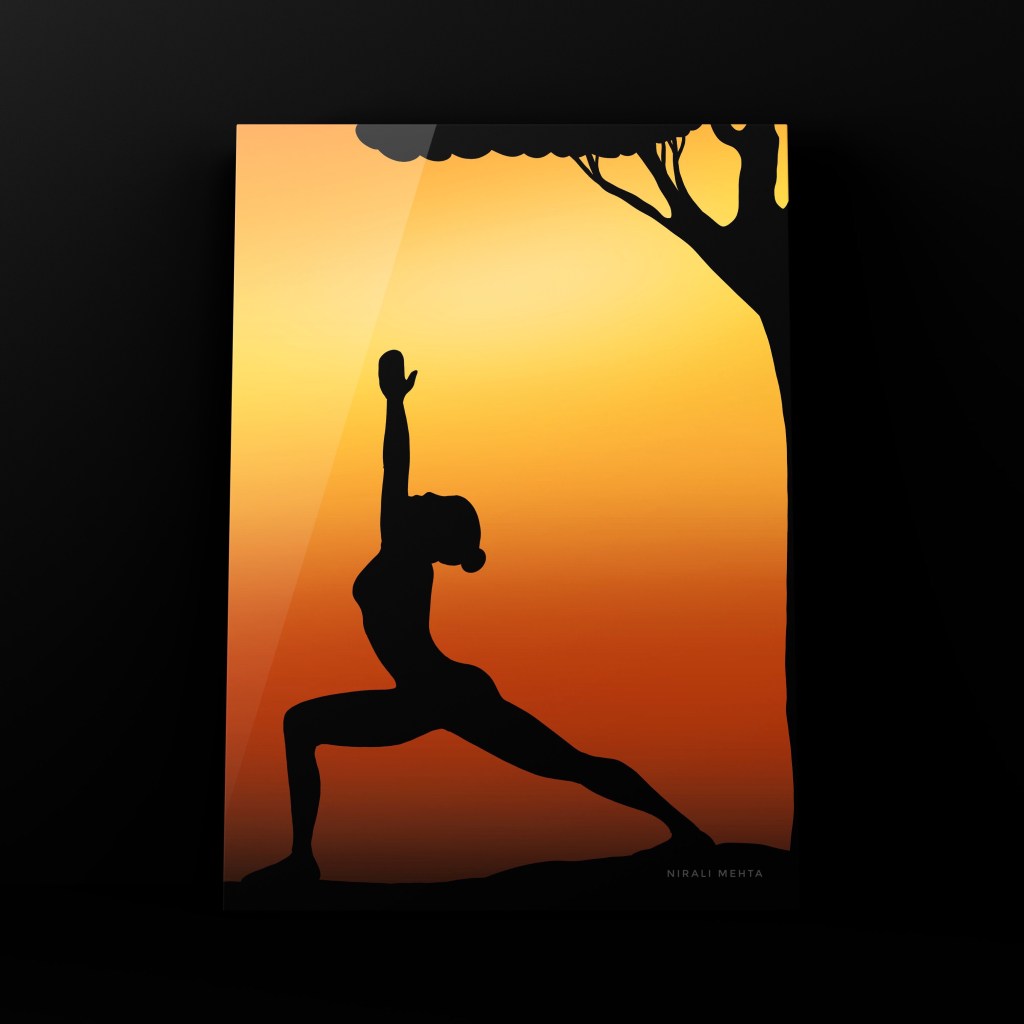
It is 3 simple easy steps 1) Decide the placing of the objects 2) Paint the background in colours of yellow and orange 3) Draw the object and colour it in black – as simple as that. One thing to note is the position of the Sun. White followed by lemon yellow followed by orange to red, brown and black. This is the colour blending of the Golden Sky.
Yoga Pose – Another one that I painted digitally
Drawing the object directly seems difficult? Let’s make it even easier. Download a ‘Silhouette’ of the object, print it and cut it. Place it on your drawing and mark the outline. Now paint it black. We can use a stencil also. For a first timer it is ok to use assistance. Once we understand how to paint it we will be able to do it without any assistance.
It is like the learning side wheels in a bicycle. We can let them off once we learn to ride. It helps overcome the stigma ‘I can’t paint’. A beautiful blend of colours with a distinct object highlighted. The colour on the outside and the object in single solid colour – Silhouette. The internet has ample images for inspiration. Choose something you like.
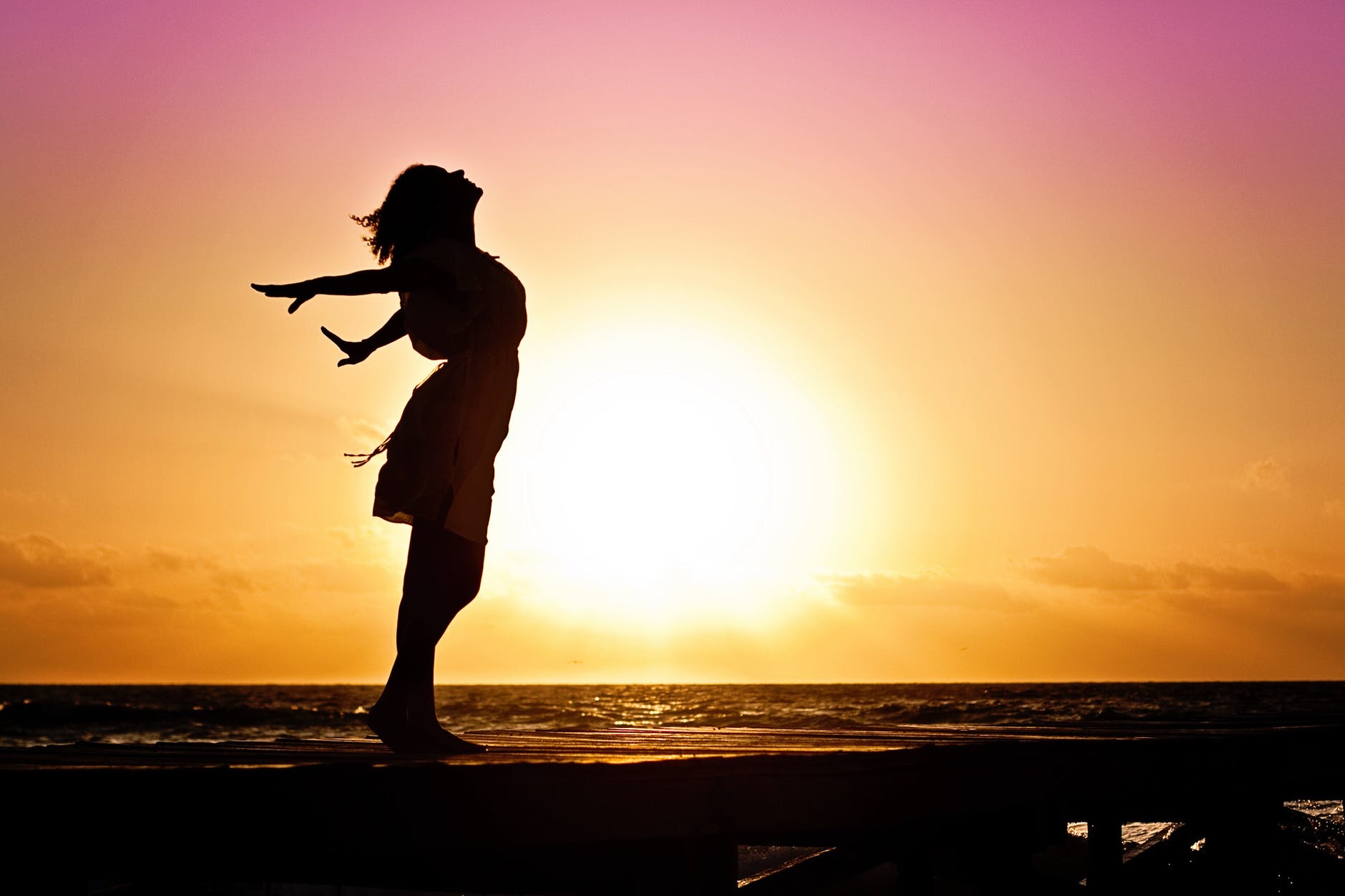
Some classic examples from the WordPress Photo Library
I paint them digitally because it is super quick. Beach scenes or by the sea shore are best drawn using this method. One of my favourites to paint would be the Knight holding the flag and the other is a famous scene from the movie ‘The Lion King’ where Mufasa roars from the top of the cliff. A woman standing at the cliff point with open arms and breeze blowing through her hair is another one I like to paint.
Painting Silhouettes is easy and hence can also be very easily replicated and copied. Hence, I don’t sell them at my shops. Decided to do a post on them for learning and understanding. One can always paint them for their learning without any worries OR If photography is your area of interest, try clicking some pictures.
We are done with half of 2021. Here is a recap of all the posts on the blog from January 2021 to June 2021 just in case you missed out reading any of them. I will be back in July with more posts on arts and crafts.
There are different ways to add the sparkle to your artwork. One of them is ‘Gilding’. It creates a nice embossed sparkling effect. It could be a simple outline or dots or stats or more in that shiny effect. Embossing with the gilding method is best suited for greeting cards as well as art and craft projects in school. In this post, I am going to share some tips to get this process right!
Yes! That is the term used for a painting technique – ‘IMPASTO.’ Impasto technique in simple words is painting with a knife. A painting knife is different from a regular knife. The blades come in different shapes and sizes to create different textures. You could relate better if I named a famous artwork created with this technique – ‘Starry Night’ by Vincent Van Gogh.
There is a good chance that you might have noticed a very striking similarity between my artwork with henna designs. It is also a possibility that I do more Ink Artwork, Doodle Art, Mandala Art and Zentangle Art because of my fluency in Henna Art. I learnt this art from my mom. Sharing ‘My Henna Story – Henna Art or Mehendi’
Easels are a one-time investment and costly. Every artist uses whatever he or she is comfortable with. Not all artists draw, sketch or paint on an inclined surface. Different painting styles can mean using or not using the Easel.
A short simple post answering questions about selecting an Easel or a Drawing Board. People usually have two opposing thoughts on this topic. Some feel “what is there to select? Every artist or painter needs an Easel” while others feel “it is the last thing to invest in”. There are a lot of myths about an Easel. No doubt it makes an excellent gift to give an artist, but do you know which one to select?
Making a greeting card all by yourself may seem difficult for some. No one wants to be judged or mocked for their artistic skills. Besides not everyone can be a master at it. I understand. But what if I were to tell you that even with minimal artistic skills and creativity one can make beautiful professional looking greeting cards. Yes! In this post, we will be discussing a few tools and techniques for making professional looking greeting cards with ease.
Our guest blogger Dr Shaazia Hawai is a dentist, who spills her love for colours onto the canvas. Join us as she shares more about her Impressionist Style Still Life Painting using acrylic paints. She also conducts live painting sessions on Instagram.
The painting process is very simple. Two steps 1) Create the Outline and 2) Fill the colours. The skilled part is in doing it. And like they say, you have to do it to know it. The texture that you see is the original texture of the glass. We select the glass based on the type we want. The material except the glass isn’t very expensive. The colours in a set are enough to make two or three glass panels. So if you want to re-use or recycle a piece of glass from the renovation, consider ‘Stained Glass Panting’. It will give a fresh and majestic look to your decor.
Taking imagination and fantasy from the world of magic and transforming it into something beautiful in this world; is what I do every day. Does that sound interesting? Hello everyone, I am Radha, a clay artist. Doing something creative by shaping earth with your hands can be an incredibly humble, joyful and healing experience.
For arts and crafts at home, we use Clay that is available at art and craft stores. Basically for hobby crafts and crafts at home there are two types of clay : one is the air drying and the other one that needs to be baked. We can use them to make many artistic objects from the comforts of our home. I have made wall murals, decorated wooden and glass panels, mirrors, jewellery and toy models with both types of clay. Yes! I know friends who have made saleable products from these. They are now successful small businesses.
Hmm.. the aroma of a freshly brewed coffee can be so refreshing, isn’t it? Sniffing coffee beans can almost reset your sense of smell. When we sample different perfumes and a particular strong smell gets to our head, it lingers. How to clear it? Take a few coffee beans in a cup and smell them. After sometime smell another perfume.
We can creatively use coffee for many things other than just sipping a nice cup of coffee. You may have come across or tried these. In this post I am sharing three artistic creative ideas of arts and crafts with coffee. I have tried my hand at all the three and they can be wonderful creative outlets for anyone, especially coffee lovers. It is the skill and material that make this art unique.
Did a hand drawn artwork and now want to make copies OR drew it digitally and now want to print it? Photographs, Graphics, Vector Art, Backgrounds, Designs, Drawings and Paintings – All of us might have tried to print these at some point of time or another. It could be for a School Project, a University Submission or a Personal Art Craft Project or for Commercial use.
I see many people struggle to get good prints of their work. What went wrong? They don’t know. I often get to hear “I gave the print command and the printing device printed it.” “I took it to a professional printer and he said the art work is not done correctly. The printing service owner said the device (printer) has done it correctly.”
It’s our loss as the money is wasted and we are not happy with the output. Today’s post is about ‘Getting a good print out’. I am going try and translate the language of a printer. In other words explain it in simple terms that everyone can understand.
‘Silhouette’ Try saying it as ‘Silu -et’. That’s right! I am not talking about a soft fabric but a technique of painting. Silhouette is also a popular method in photography. It is an object or profile in dark black against a very bright source of light, usually the Sun.
What is Coffee got to do with Art? 😀 My young followers have exams coming up at schools, colleges and universities. Coffee will be their best friend keeping them up studying late nights. Just like a good coffee is all about the blend. Art is also all about blending and having the right combinations. All set? Prepared?
The title says it all ; this is a all you want to know kind of post and it is all about ‘The Washi Tape’. Ok! What is so special about it? Fine! It is just another tape, so use it as one. True! I think it is a door to creativity. Especially for storytellers who cannot draw well but have so much to say and share.
Click! Click! Hehe! We don’t get to hear this clicking sound anymore. The cameras are silent but we still click as many pictures or probably more. Now that our phones have a very strong camera lens, we like to capture every memory.
It is a memory, it is special. Then why let it remain in the phone. Let’s print it and put it in a nice photo frame. That is my topic for today’s post – a very simple easy DIY Photo Frame. Complete description with material details.
February 2020, I embark upon a journey. A quest for the grey ghost of the Himalayas ; the elusive Snow Leopard takes me high up to the snow clad peaks of the Himalayas on the Kibber-Kaza Belt of the Spiti Valley, northern region of India. Located at an altitude of 15000 ft above sea level this area is an endless sea of snow all around during winter and the mercury level drops to as low as 30 degrees celsius below zero.
After days of battling such extreme conditions we found no signs of the elusive predator. It was physically and mentally challenging – like the worst form of punishment, particularly the splitting headaches caused by lack of atmospheric pressure at extreme altitudes. However our gracious hosts for the trip left no stone unturned in keeping us warm and motivated. They were confident we will soon find what we came for.
While waiting for the Leopards.. it’s the Blue Sheep
Day 4, finally the news came in! Our trackers had spotted some fresh paw prints. We rushed to the spot after a difficult trek of about 2 hours. Upon reaching, our joy knew no bounds. We saw them! We saw them! Not one, not two but a whole family! A family of Snow Leopards on the opposite cliff at a distance of about 300yards. It was a beautiful sight, difficult to express in words.
Mother with her cubs – Snow Leopards all cuddled upMale Snow leopard. This image was clicked at over 300 yards distance.
Photography trips to remote areas like these are a splendid learning experience. Think of it as an opportunity to live with people from very different cultures, eat their local food, learn their way of life ; and then come back home with a pot of gold- a bag that is full of memories and photographs. They say ‘A picture is worth a thousand words’ and a well taken photograph can create memories that last a lifetime- making that moment immortal. It is for these breathtaking moments that I think I took up Wildlife Photography as a hobby.
In the current era of high quality cellphone cameras, almost everyone has already been practising Photography at one level or another. Then it could be selfies, family pictures on holidays or photos for social media. Photography is a hobby that anyone can take up, at all levels, no special skills or complex technical training needed. Easily accessible most of the times a good camera phone or a point and shoot camera is enough to capture some first basic clicks.
However if you are serious about the Art of Photography I suggest you must strongly consider investing in a DSLR. Specifically for the purpose of low light Photography or Wildlife photos that need a strong zoom lens. One needs to consider the fact that despite having millions of pixels, the image sensor of a cellphone camera is about the size of a fingernail, while that of a DSLR is generally over an inch in length. A basic DSLR with dual lens (wide angle and zoom) can be purchased at most electronics stores for as low as US$400. Additional equipment can be rented at reasonable rates.
The importance of a hobby in our lives can be highly underestimated sometimes. Particularly by the city dwellers who hardly have any time, even for themselves in all the hustle bustle. I learnt this the hard way after suffering from severe anxiety and panic attacks. Thereafter, once I took up Photography; there was no looking back. The positive vibes were noticeable in my physical, mental and spiritual health. To lead a happy and peaceful life, one needs to have something to look forward to, something that brings the energy to bounce back on your feet.
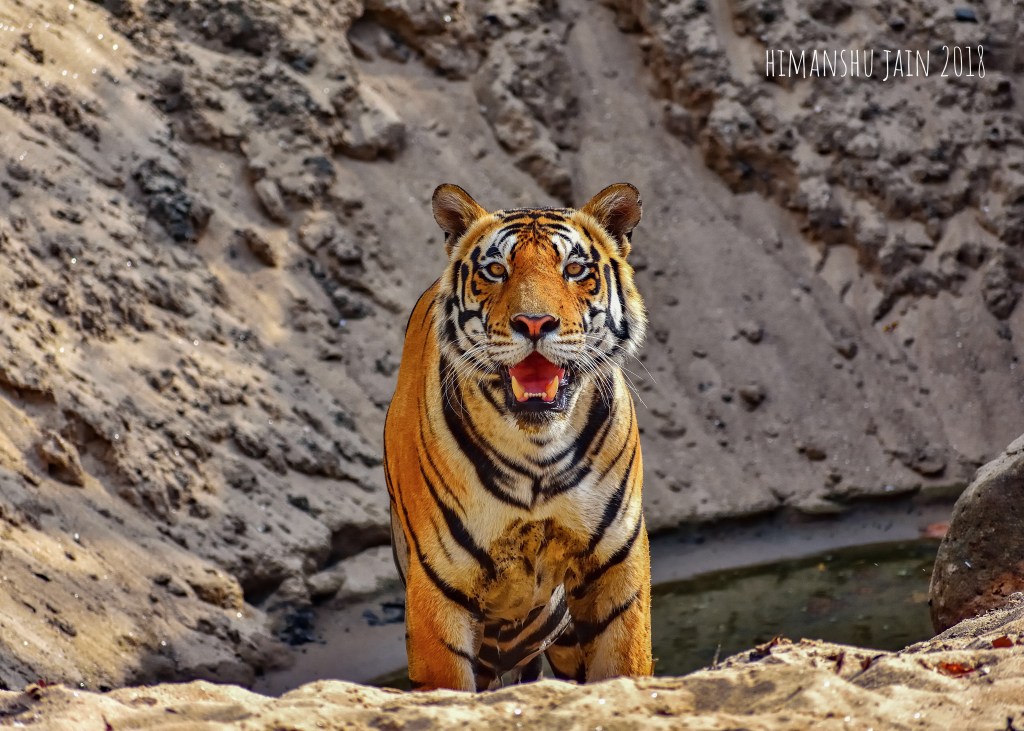
It all started with a small adventure trip to the Pench National Park, the location of the famous ‘Jungle Book’. We sighted a Tigress and managed some pretty decent photos with a point and shoot camera. Encouraged! By the next trip, I decided to buy a beginner level DSLR. This time I was lucky to spot a huge male Tiger at a close distance in perfect light. It is interesting to note that if the light and distance are in favour, even a basic DSLR and lens combination is more than enough to produce a high quality image.
Male Tiger – One of the photos Himanshu clicked with a DSLR in the fully automatic mode during his early days of photography.
Imagine! Tracking down a Wild Tiger in a dense jungle can be such a thrilling experience. Pitting down your senses against the ultimate killing machine – total adrenaline rush. Known for it’s strength and enormous power ‘The Tiger’ is also the national animal of India. What makes wildlife Photography so challenging is the fact that the subjects are hardly co-operative. They hardly show themselves, specifically when the light is ideal for photography. This makes a good image a very satisfying reward.
Like every artist even a photographer wants to improve his work each time. Can’t help but think- I want a photo with better eye contact. Next, I want to photograph of the Tiger drinking from the pond of water with reflection. Until it becomes a never ending process of multiple trips to the jungle while upgrading the camera and lens kits.
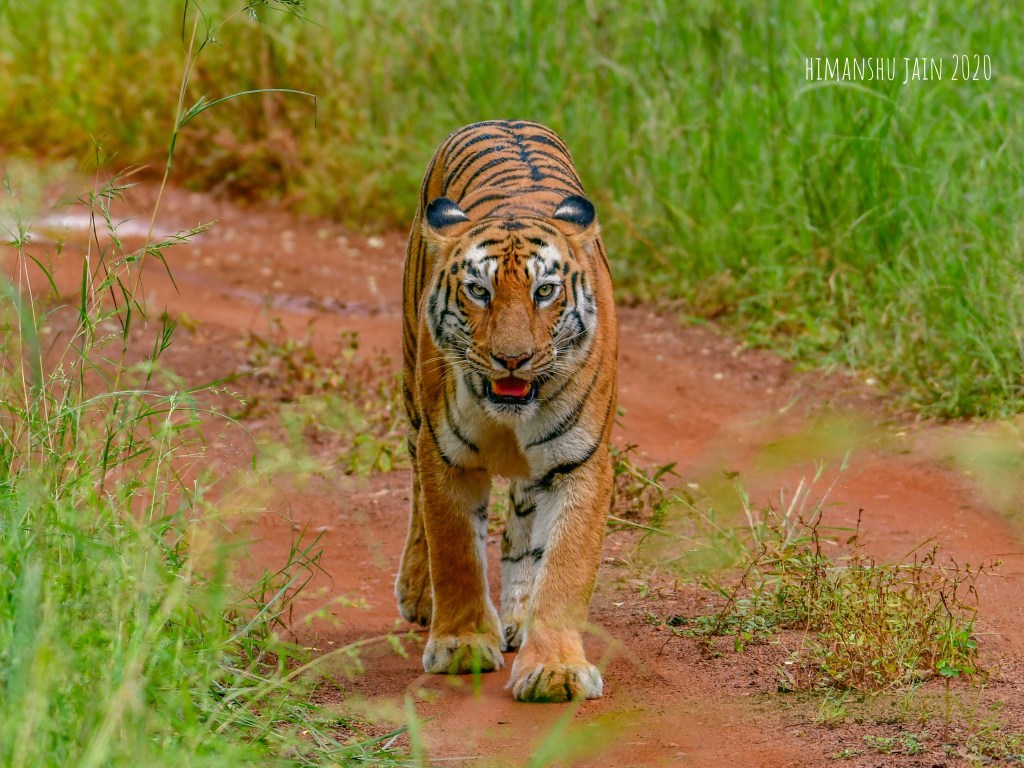
Tigress Maya Head on
Sharing some of the things I learnt with time. I think these can help budding photographers wanting to take up Wild Life Photography.
1) Do as many field trips as possible, if targeting Tigers, do multiple core zone safaris. Photography is best learned through experience on the field and not by just reading.
2) A bit of homework always helps though, like a basic understanding of concepts such as the ‘Exposure Triangle’. This consists of 3 Variables. Shutter Speed, Aperture and ISO. The way a digital camera works is; the lens casts an image onto a sensor, which has individual receptors for each pixel. These are then put together by the processor to create a digital image.
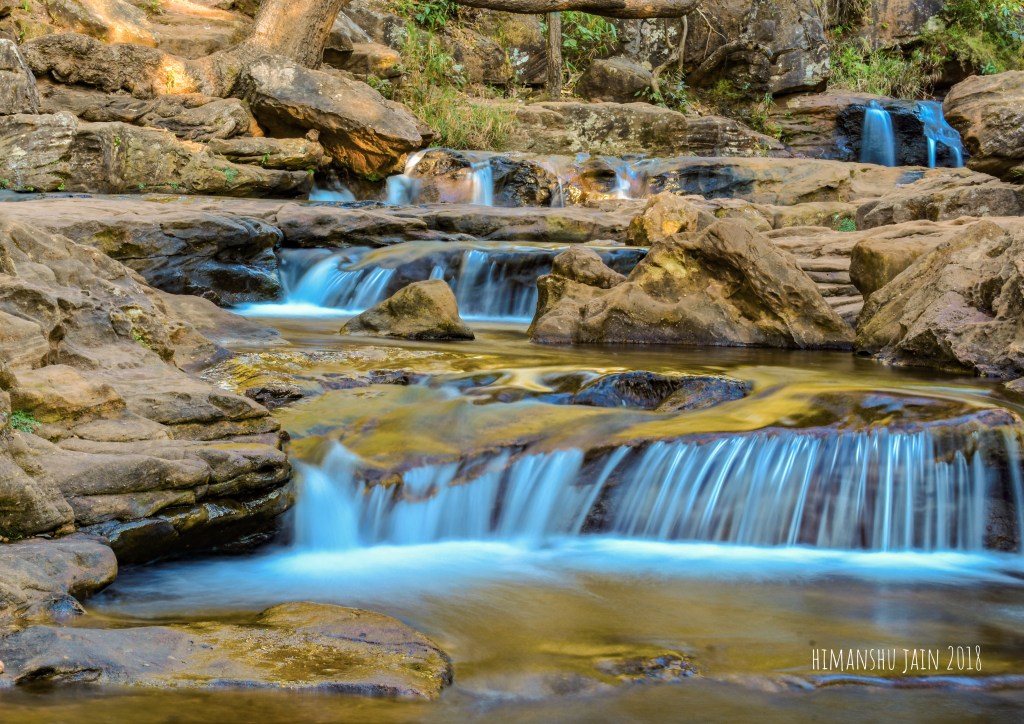
a) Shutter speed :- This is the amount of time the scene, or image is imprinted on the image sensor. Faster shutter speeds (around a thousandth of a second) freeze motion and are desirable for action shots, while slower speeds will cause a motion blur when the subject is moving, or due to vibrations of photographers’ hands. Slower speeds are desirable in situations like low light photography, or when one has to show movement in the photograph. Like flowing water, or mist effect on waves. It is called long exposure Photography and must be done with a tripod as it is impossible to hold a camera still for such a long time.
Waterfall – Long exposure Photography
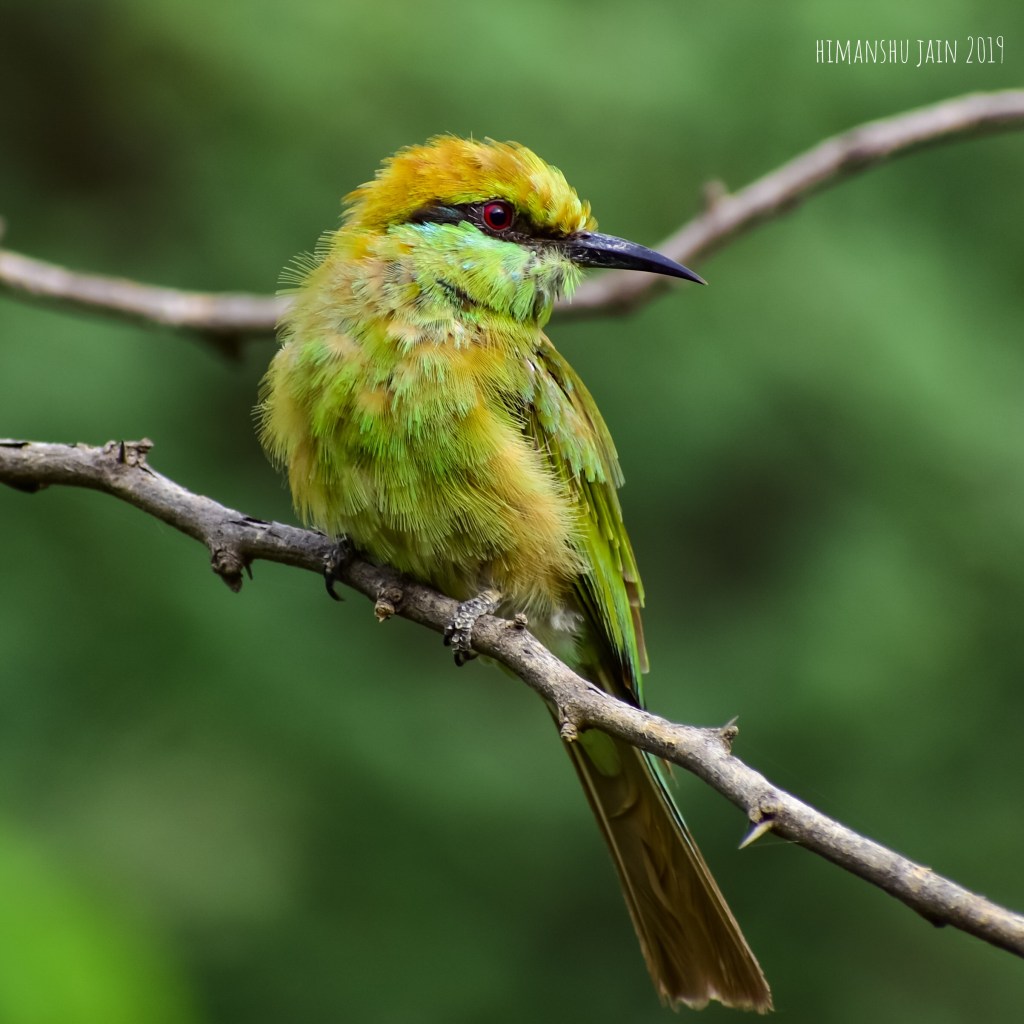
b) Aperture :- is the opening in the lens through which the light passes. Smaller the aperture (meaning larger f number), the lesser the light will pass means a greater depth of field (more part of the image in sharp focus), while a wider aperture (smaller f number) means more light passes, a brighter image but only a small part will be in sharp focus. Wider aperture means narrower depth of field producing a bokeh effect, where only the subject is in sharp focus with a blur background. The effect is often desirable for wildlife.
Green Bee eater – Location Jhalana Leopard Park Jaipur
c) ISO :- is the sensitivity of the sensor to light, higher ISO will produce brighter images, but with low sharpness and with digital noise (those dots that appear on images clicked in low light). ISO typically shoots up in low light, super fast shutter speed or very narrow aperture.
Snow clad Himalayas clicked in low light conditions
It is critical to balance these 3 factors to have enough light onto the sensor. Too much light means an overexposed image with burned overly bright pixels, and less light means an underexposed dark image. Both overexposed and underexposed images will lose out detail in the photo. Fortunately most modes on the modern camera will balance out these 3 variables to get perfect level of exposure.
Vulture clicked in the clear skies
3) Discipline is the key both in terms treating the camera kit well, as well as punctuality. Reading the camera manual from cover to cover can provide invaluable tips regarding cleaning and maintenance of cameras, as well as finer details of photography. Good sleep is equally critical. Early morning hours are important, in terms of movement of the larger Carnivora, and one must be alert in these hours.
4) Most important factors for good photo in the correct order are :-
Light Angle
Distance to Subject
Lens
Camera
It is desirable to light up the subject well, specifically in wildlife to attain higher shutter speeds for a sharp image. Hence it is best when the sunlight is behind the photographer lighting up the subject. Also, in case of animals in movement, it is better to project their path and position oneself in advance to get a photo with face and eyes rather than following the animal. Against the light photos can be taken as silhouette shots.
Silhouette clicked by Himanshu
5) In case of a beginner using a DSLR, it is OK to start with Automatic mode, but when possible, get to the manual mode, experiment and see the result of different settings in terms of Shutter speed, Aperture and ISO.
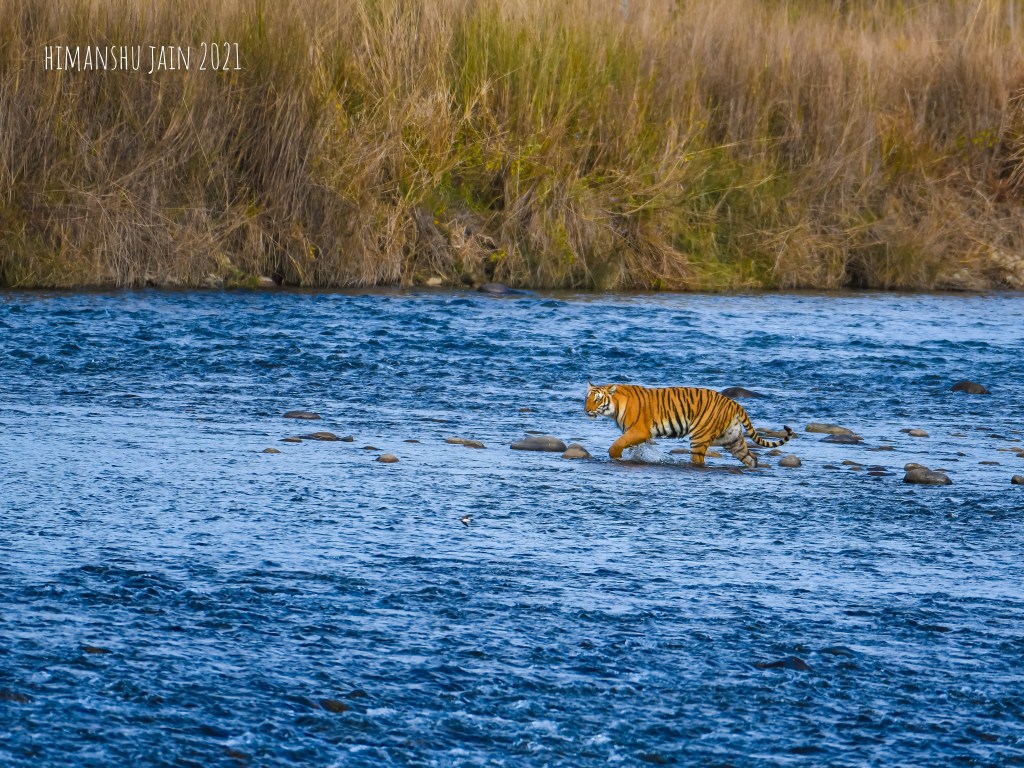
6) Image composition is critical, spend some time reading about the rule of thirds. According to this guideline, the subject must be placed on left or right one third of the image, facing the negative space in the other two thirds. This composition typically draws greater attention of the viewer’s eye rather than placing the subject in center.
Tiger crossing the River – Rule of thirds
7) Remember when we visit the Jungle, we are going to the home of the animals and birds. Let us be responsible eco tourists, and do our best not to disturb or adversely affect the inhabitants.
Photography can be a fun learning experience and a very addictive hobby, especially for those who like to travel. One may specialize in a specific form of photography based on personal interest and choice. It is a great idea to showcase one’s work on various platforms and social media, which enables interaction with like minded individuals, and provides motivation to take one’s skills to the next level.
Have an Arty Week!
Guest Blogger – Mr. Himanshu Jain
Passionate about Wildlife Photography Himanshu is a Businessman from Mumbai. He took up Photography as a hobby in 2018 and has been on a number of wildlife trips since then. His interests also include Cars and Coffee.










 NMartworks