The Black and White of Pen and Ink Drawings – Ink Art

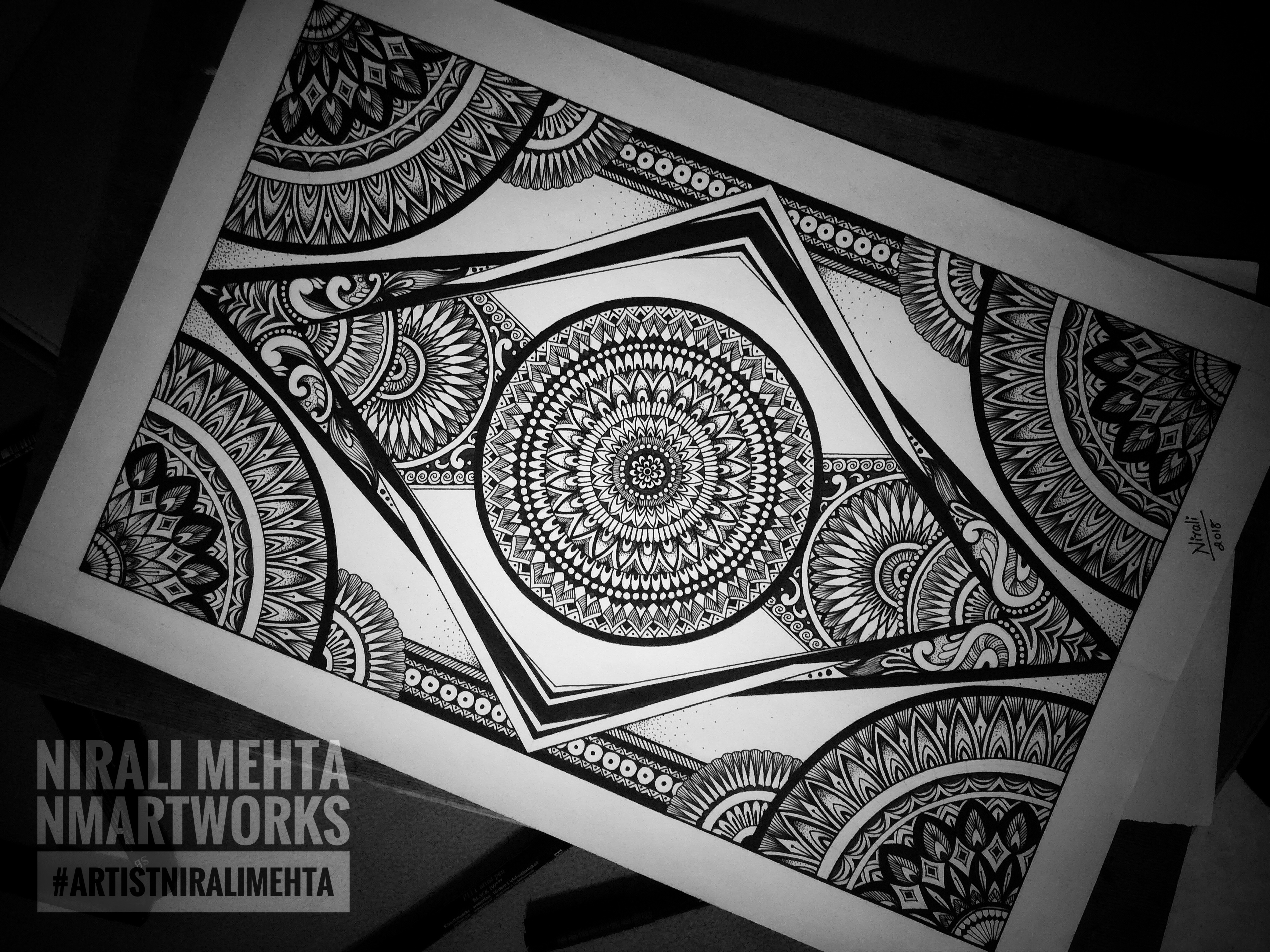
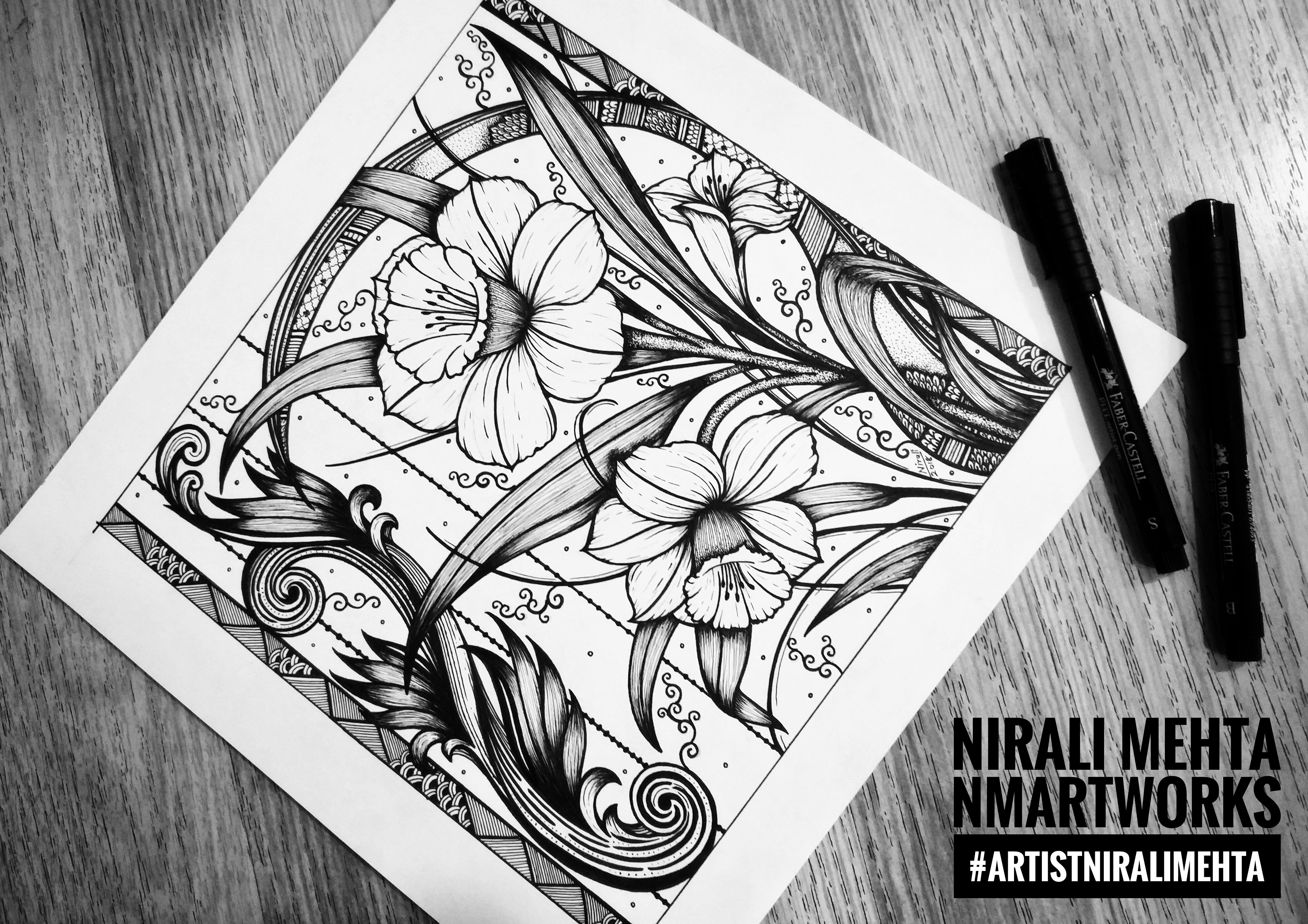
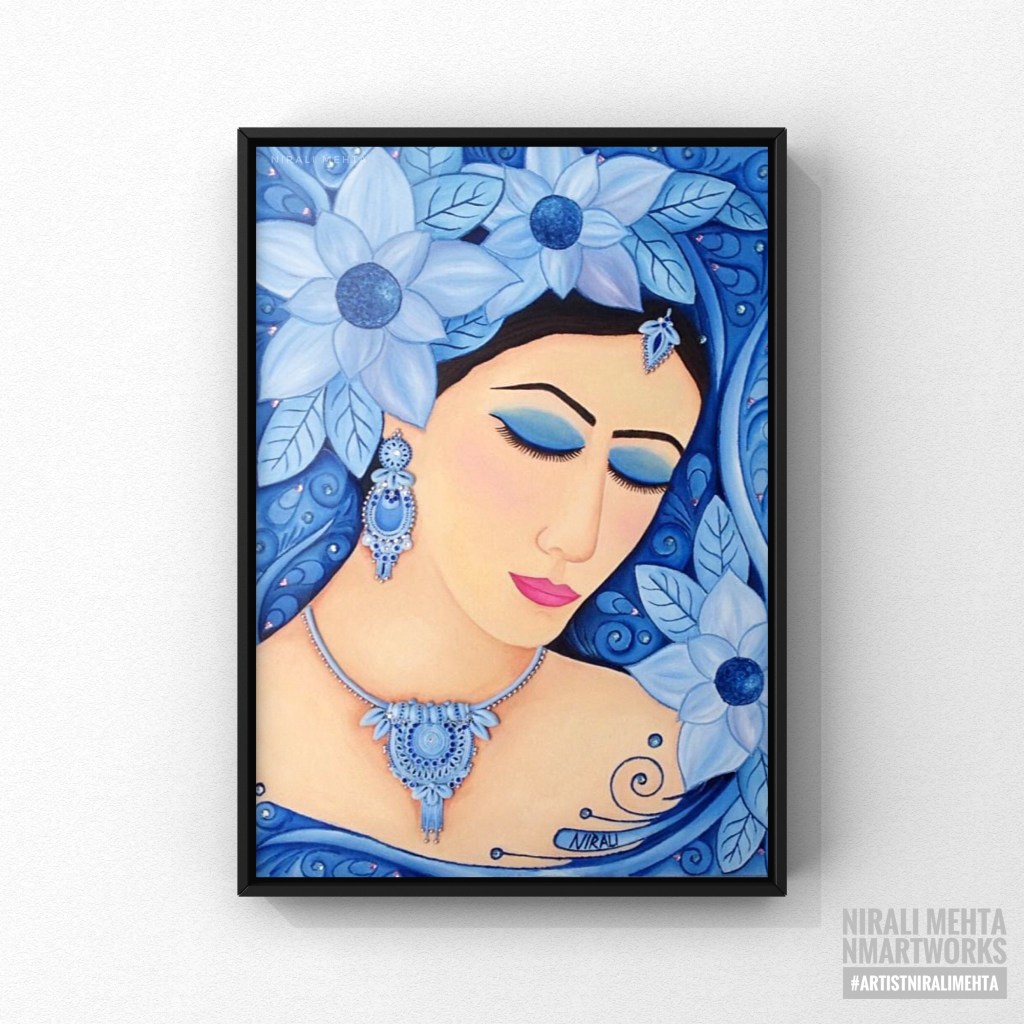
Clear lines, strokes and dots of Black Ink that make beautiful works of Art – Ink Work or Pen and Ink Drawings have been my forte. Original hand drawn Ink Art and Illustrations as well as Art Prints of my Pen and Ink Drawings are available at my Shops. I like to draw and paint Birds and Flowers the most. Sometimes I use Ink Pens along with Watercolour and Gouache colours for my Artworks. In this post I am going to share all about my favourite medium – Ink. Because it is Black Ink on White Paper usually, the Art works are also called Black and White Illustrations.

Link to the post on Doodle Art, Zentangle Art and Mandala Art

We have explored Zentangle Art, Doodle Art and Mandala Art in my previous posts. These Arts are mostly done in Ink. I have also shared about selecting Pens and Markers for your Art in another post. It is the main material for Ink Art. Ink and Paper are the only two materials required for Ink Art. For some techniques we may draw the initial sketch in pencil. Please refer to these posts for detailed information on these topics. It would be additional helpful information on Pen and Ink Drawings.

Link to the post on Selecting Pens and Markers for your Art

This time let’s take it a level higher. Explaining in simple words we can say – creating Drawings, Illustrations and Sketches using Ink Pens and/or Ink with bamboo sticks or brushes is called Pen and Ink Drawings. Very good quality Ink Pens with a variety of nibs are easily available. We don’t have to use brushes or Inks from bottles anymore. This has led to a lot of people taking up many of these Art styles.

Tattoo Designs, Ink Illustrations, Stippling Art, Mandala Art, Doodle Art and Zentangle Art are all very popular on Social Media. We have many artists sharing these works made with Ink. Botanical Illustrations in Ink are loved by many.

Click here to view my virtual Art Gallery and see more of my Artworks. You may also visit my shops (links on the homepage) to buy my Art. My works of Art would make suitable Wall Art for contemporary spaces both Residential and Commercial.

Artist Pens have Inks that are fade-proof, water-proof and permanent and are available in all major colours. ‘Archival Inks’ as they are referred to are also fade-proof, water-proof and permanent Inks.

Earlier Ink artworks would be made using brushes or bamboo sticks dipped in Inks, just like Calligraphy. If it interests you, do read my earlier post on the Art of Calligraphy. Painting with those would have surely been more difficult. Pens that are available now make it much much easier to draw and paint. These Pens have become so much a part of our Artworks that we use them even for something like just giving an outline or darkening a pattern.

Link to the post on Calligraphy

These Pens are available in a set as well as loose Pens. The ink, nibs and grip of Pens of all brands have a minor difference. I have used pens by almost all the major brands and have liked all of them. I use Micron Pens (Archival Inks) most often. I also use Pitt Artist Pens by Faber Castell for brush nibs and accented tips.

My other favourites would include Uni Pens and Winsor Newton Markers for a more Watercolour like finish. These are more like Artist choice Pens. It would be absolutely ok for students to do the same kind of Artwork with the other Pens or Markers that they regularly use. No problem at all. Permanent Ink is also available in bottles. We can still use the traditional method of writing or painting using Ink from bottles with brushes or bamboo sticks.

The Paper you select must be thick to absorb the Ink. Handmade Paper gives the authentic olden days look. If the Paper is thin the Ink bleeds or may move on the back side of the Paper too! The Pens should move smoothly and give a good finish to your bold and confident strokes.

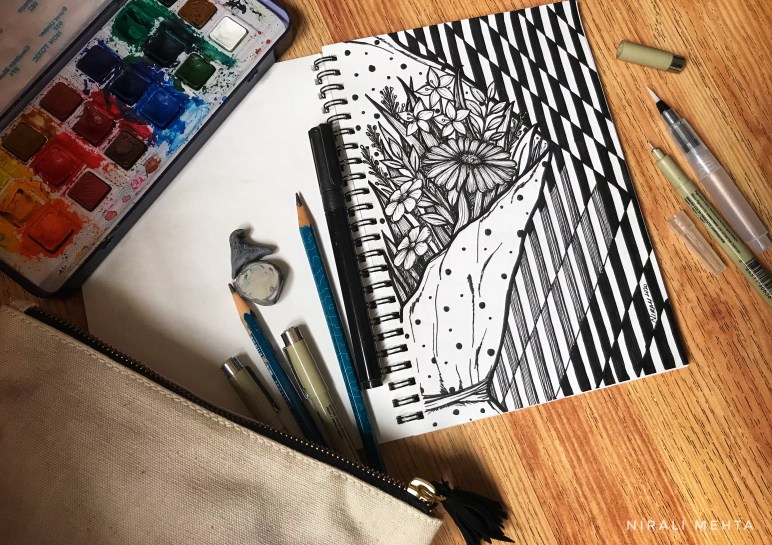
Work in progress of an Ink Art
A closer look at the making of one of my Ink Illustrations

Black and White does not mean just a dark black tone. It is important to shade and show dark light areas even in Ink drawings. For this we can use any one of the following techniques or we can create one of our own. The shading adds depth and makes it look 3D and more realistic. Sometimes people use a black colour pencil and shade the colour, it is an easier way out though. Like me you can also do a combination of two or more of these Ink Art techniques if you want. Here are some of the techniques :-

Ink Art Techniques
Ink Art Techniques

I am completely in awe of the Japanese Art of Ink Wash Painting. Also known as ‘Sumi-e’ Painting. It is typically monochrome, meaning it uses shades of black on handmade white paper. I was told that the Ink and brush and/or bamboo sticks used for this Painting are same as those that were used for the Art of Calligraphy in China in earlier days. ‘Ink Wash Painting’ as they called it is said to have began during the Tang Dynasty in China.

It was introduced to Japan by the Zen Buddhist Monks. Sumi-e Artists paint Nature, People and Places. Their brushes are special and different from regular brushes and it is all about these clear black strokes. I have been wanting to learn this Art since a long time. Let’s hope I get a chance soon, may be sometime in the future!

If you have any questions on how to use this medium, feel free to ask them in the comments below. Have an Arty Week!

Why is Acrylic Paint the most preferred medium to paint?

If there was something like a ‘People’s Choice Award’ or an Award for the ‘Most Popular Paint’, I am sure it would go to Acrylic Paints. While the others are more natural dyes and colours, Acrylic Paint is synthetic and man made. It is easily available at stores selling Art Supplies as well as all Paint and Stationery Shops.

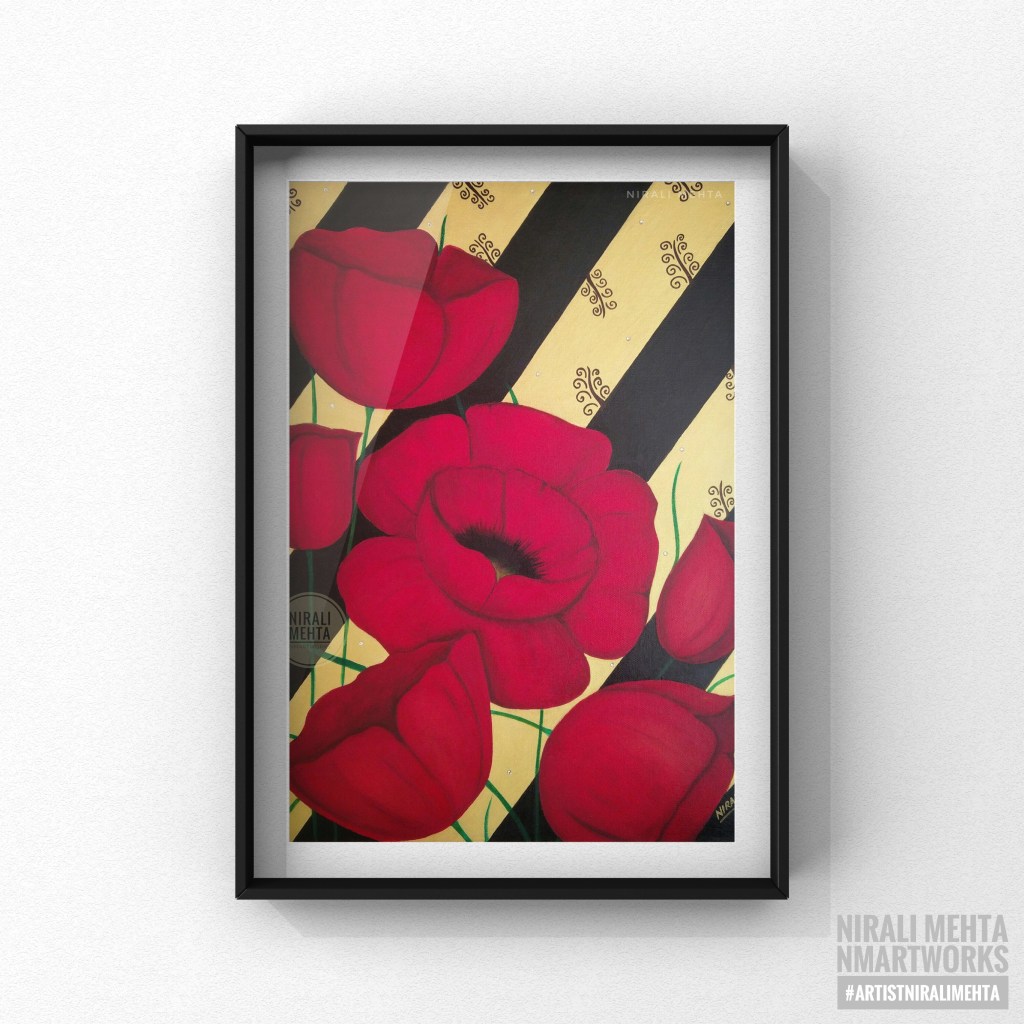
Acrylic  Painting  Poppy  Flowers
Poppy Flowers – An Acrylic Painting that I have done

Acrylic Paints vs. Oil Paints

Oil Paints take 7-10 days to dry completely. It is this quality of oil paint that helps in mixing colours and blending them. Any artist who has worked with oil paints will agree, it is this property that really helps in making those realistic paintings.

Oil paints have one major drawback ; by any chance if any little traces of water get trapped between the colours because of humidity then the painting develops moss. Refurbishing, Repairing or Repainting- nothing works.

Oil Painting  on Canvas
Indian Mural Style Oil Painting. The ornaments are modelled from clay

When beginning a new oil painting, the canvas needs to be seasoned (sizing) to absorb oil. The more oil it absorbs the better finish. Whereas for Acrylic Paints we only need to use ‘Gesso’ to prime the base. Gesso is like a paint which when applied to any kind of surface prepares it for the paint to be applied. Last but not the least having a glass frame and making the frame airtight ensures that the Oil Painting stays well for longer. Acrylic does not have any such requirement.

Brushes and Palettes can be cleaned with water. If we get some paint on our hands or any surface while painting, it can be easily cleaned with water or removed with acetone. It usually petals off like a plastic coating. We all know that is not the case with oil paints. We need to keep a separate set of brushes for Oil Painting which cannot be used for anything else. On the other hand it is possible to have a common set of brushes for Watercolour and Acrylic Painting since both are water based paints.

Acrylic Paints vs. Watercolour Paints

It is possible to achieve a Watercolour like finish using Acrylic paints. We can mix the colour with different mediums such as Gel, Gloss, Matt, Pearl and so on to get different effects. We can create textures and even achieve the level transparency we want in the colours of the painting with Acrylic Paints.

This image is created from stock photos for explanation

Watercolour is basically for Painting on paper. Even after a painted layer dries, water can be used to mix or blend both colours. Water can be applied on the paper and then colour drops can be added, giving this grains effect. This painting method is suitable to Watercolours. So most artists specialising in Watercolour Painting will not want to use Acrylic Paints. Watercolours are also easy to work with, portable and can be carried along. The cake form is very compact and portable. Mixing of colours to get your shade is easily workable.

I use a mix of Watercolour and Acrylic Paints for my paintings listed on the shop for sale. You may visit my Etsy Shop or Social Media pages to see those.

Here are some of the reasons I think this Acrylic Paint is preferred equally for both Arts and Crafts :-

1) It has a unique property. It is soluble in water and hence diluted with water to paint. However once the paint dries the polymers bond to give a water-resistant painted surface.

2) Acrylic Paints can be used to paint on multiple surfaces including Canvas, Paper, Wood, Glass, Walls, Ceramic and Fabric. I have personally tried them on all of these. We need to seal the completed work with varnish and we are good to go.

Recycled Pen Stand Acrylic
Recycled this old plastic container by repainting with Acrylic Paints

3) We can select the consistency of the paint. The Acrylic Paints that are available in Tubes have a slightly thicker consistency as compared to those available in bottles. The ones in the bottles are liquid like pouring consistency. Both are Acrylic Paints and can be used together on all the projects. The pouring consistency colours work well for projects like Dot Painting and Fluid Art.

Recycled Roll up Brush  case
Roll up brush case I made from my old jeans. Dot painting with Acrylic Paints

4) These paints are available in smaller tubes of size 9ml to larger tubes with 40ml to 120ml. Also available in bottles and larger cans. We even get Acrylic Sprays. Art and Craft Schools and Studios can stock large containers while people who do one off projects can buy the smaller ones. Further if we run out on a particular shade, we can buy just that single shade too!

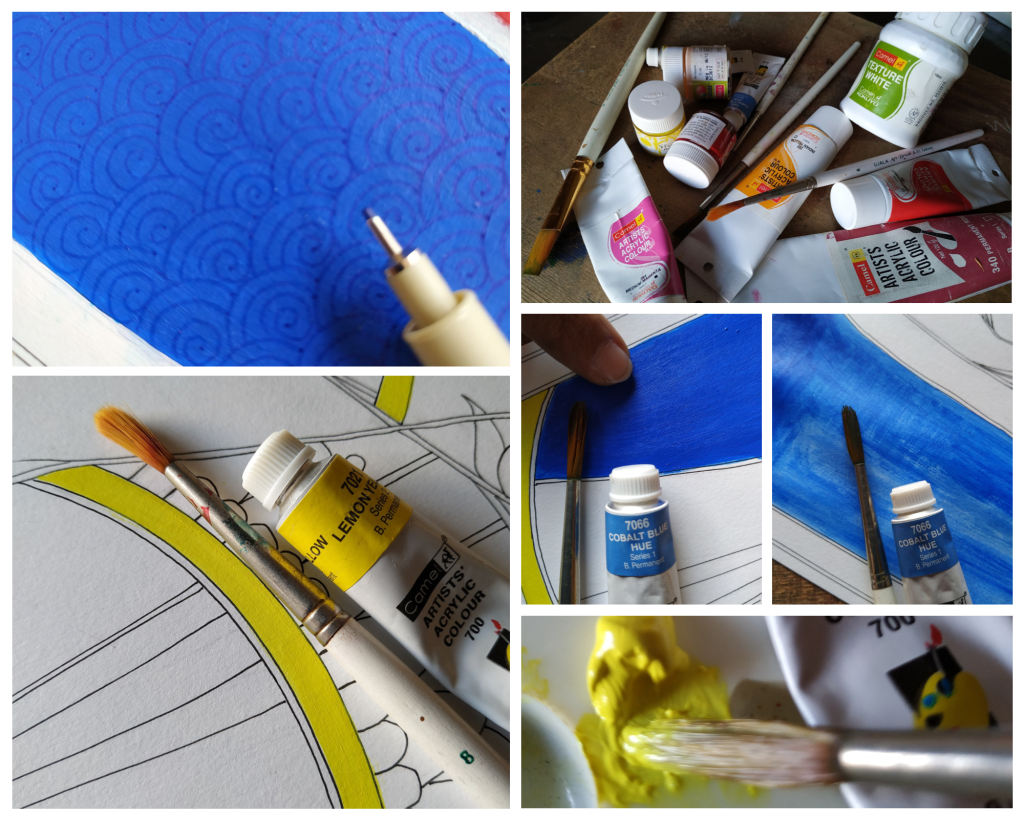
Photos of my Acrylic paints
I use Artist quality Acrylic Paints by the brand ‘Camel’ or ‘Camlin’ because of its easy availability and reasonable pricing locally.

5) Water Resistant surface makes it easy to combine it with other art materials such as permanent markers or watercolours. Acrylic colours can be used on watercolour painted surface but not the other way around because for watercolours to work, the paper needs to absorb the water. Acrylic paints make the paper impermeable. Acrylic paints can be used alongside or as highlight on watercolour painted surfaces.

6) Acrylic Paints are preferred for creating textures. An artist can achieve the effect he wants with the colours – solid thick, translucent or transparent finish, all by mixing different quantities of mediums and/or water. It is like painting in layers. The bottom layer dries completely and then we paint the next layer. We can even paint a white on a black without the previous layer smudging at all.

Knife painting on canvas
A closer look and method for Knife Painting with Acrylic Paints

The fast drying property and thick paint consistency make it suitable for Impasto or Knife Painting. By using these methods of painting artists can create a good variety of textures. We can use ‘retarders’ to slow the drying process and increase the working time for blending.

7) Almost anything can be painted with Acrylic Paints. These paints can be used for Painting on pots, Painting Clay, Canvas Painting, Painting on Paper, Painting on T-Shirts and Tote Bags, Pebble Art, Wall Murals, Painting on Glass and Mirrors, Painting on Tiles, Mixed Media and a lot more variety of Art and Craft Projects.

Mixed Media on Canvas
Mixed Media Acrylic Painting. Flowers are modelled from clay

8) These colours remain unaffected by humidity or extreme cold or heat conditions.

9) Framing is optional. Hence we have wall mounting canvases. To clean it simply take a dry brush and lightly dust of the dirt that may have settled on it and it will be clean.

Wall mounted  Impasto Painting
Wall Mounted Canvas – Knife Painting using Acrylic Paints

10) Variety of Colours and Shades. Mixing colours might not be a good idea because it dries very fast. So buy them in the colours or shades needed. There will usually be a whole shelf dedicated to it. Any colour that we need can be bought anytime. We get neon shades and glow in the dark paints too!

The only drawback with Acrylic paint is that the colours will dry out if the water from the colour evaporates or if the bottle is left idle, so cap them well. Remove the colours in disposable containers in the required quantities instead of painting directly from bottles and leaving large containers without the lid for long hours of painting.

Acrylics are easy to work with. Rectifying a mistake is also easier when using Acrylics, so it works well for beginners as well as professionals. I really don’t know what more can they offer to make these paints better. Definitely worth buying a box and trying out some Art projects. I have shared some of the recent Projects that I have worked on using Acrylic Paints. All these are still with me and not for Sale. The paintings for sale on the shops are different. These are all from my personal collection.

Have an Arty Week!

5 Ways to Fine Tune your Art – Drawing, Painting and Sketching

Ever looked at your finished Art and thought something is missing. Somehow I am not completely happy with it. There could be something to improve but I just don’t know what? Further sometimes we don’t even know where to look, which part of it needs to be fine tuned. If we work on one portion, something else looks out of place. I know this feeling, it happens.

So do you know how to get it right? That is the question I am going to try and answer in this post. In this article when I say Artwork: it means Drawing, Painting and Sketching. And when I say object- it refers to whatever we are drawing, painting or sketching. I don’t have a checklist of any kind but I can definitely tell you the five ways to fine tune your Artwork in order to improve and make it better based on my learnings and experience.

These are also the observations we need to make when doing Art. If you observe these and are able to check them right, not only would you be good at Art but also find it easy to understand and learn different Art styles. This is more or less an exhaustive list. It does have sub topics or points. In a way it is also 5 mistakes to avoid while making Art.

It is like a grade meter, how much fine tuning is required for each of the parameters will have to be determined by you. That is because it is to your taste. Over a period of time with observation and experience you will be able to decide your own parameters for each of these. Perfection isn’t when all of it is present, it is when all of it is in the right quantities. So let’s begin listing them.

1. Shapes and Patterns

Everything has a main outer shape and maybe more smaller shapes. It is important to observe this. First we draw this main shape and then do the details. Consider it as rough work to your final answer. This also helps decide the placement for various objects in the Picture. You can also take them as a marking of the space each object can take on the canvas. It is important to place things evenly or rather correctly space them out on the canvas. Most people make the mistake of skipping this step and begin to draw directly.

Let’s consider drawing something like ‘My House’. If you are drawing this landscape, make the large main shapes of the tree, the fence, the house, the sun or sky, the human with his pet, the ground and so on. Then add the details. Erase the rough work. It is the correct method to draw.

Some videos on the Internet will show super awesome Artists who complete one particular corner of the art with full finished details while the rest of the canvas is blank. Wow! They are super humans but we are normal humans and this is how we draw. It is mostly a digitally edited video, very rarely can anyone draw like that. They need to get into the book of records for such exemplary skill if they really can. For the rest of the normal people this is the first step for drawing anything.

Everything in nature has a pattern. So for example when you draw a flower. Look for this main shape of a circle or an ellipse. See the pattern of the petals are they – above or below, in odd numbers or even. See the shape of the petals – pointed or round, long or circular. Further see the centre of the flower and look for a shape there. The pollens will have a pattern – are all of them in the same direction, how many turn right or left. These things we need to observe and then when we draw, we match it with our reference.

2. Proportions and Scale

Many people confuse these terms. So in another words it is the size and ratio of the objects drawn. So in your landscape a bird cannot look bigger than the tree, that is scale. Now how much space of the tree is the branches and how much the leaves – that is proportion. That is what we need to observe. How the object looks in context with the other objects in the picture and what are the proportions of its own parts. When drawing a human face you would note the proportion of the eyes to the eyebrows, the nose and lips. The scale would be the size of the actual face. They are connected and not used in isolation.

3. Perspectives and Backgrounds

Which angle or point are you looking at it from? Top or bottom, right or extreme right. The distance- up close or far away. The objects which are closer are detailed, while the objects farther away at a distance in the background may not have all the details. If you draw details of all the objects in a picture, it is like keeping everyone in the front row. It will look like everyone is shouting for attention. The focus is always on some objects in the front and less on those in the background. Artworks with backgrounds look complete.

Perspective adds depth. The third dimension or 3D. This makes the object look natural as against flat image. 3D means 3 axis – X axis, Y axis and Z axis. Length, width and depth or thickness. The most common example is if you draw a rectangle. Now try imagining this as a box, as that of the wall of a house or this wall Humpty is sitting on.

Your position while looking at the object determines how it is visible to you. For example four different people looking at a car from four different spots – the top, from the right, the left and the bottom will all draw it differently based on what they see. Correct? What your view is, is your perspective. This brings about a balance in the picture.

4. Light, Shadows and Highlights

In one picture there can be one source or two sources of light. Two when there is one natural source like the Sun and two when there is a light fitted or the created source. The light coming from any point does not fall equally on all the objects. The rays fall in a straight line and not in curves. So the whole picture has be in sync with it. The Shadow of an object is determined by the direction of the light and also falls straight. Depending on the position, the size of the shadow will change. There could be a situation where the shadow of one object also falls on another.

There is something called highlight – when a significant portion of the light falls at a spot and it almost looks white. We colour or shade from light to dark or dark to light and then add the shadows and highlights. This adds depth to the painting. Also observe how an object reflects the light. The texture and surface of the object determines that.

It really looks funny when all objects have different sources of light and random shadows. There has to be a flow in the picture.

5. Colours, Shades and Tones

Tones is Dark, medium and light. This is determined by the source of light in your picture. When you do an artwork in black and white it will still have these. The gradient is smooth and blending it is important. Where we want to show it as blocks, we make sure the edges are crisp. When we colour the objects, we can try as much as possible to match the exact colour to the real object. Mixing of colours to make various tints, tones and shades can be understood with the help of the colour wheel.

There should be a contrast between the dark, medium and light tones otherwise the image will look flat. Meaning how dark the colour looks against the medium tone colour. Whether the difference is significant or very little. Sometimes all you need to do is make the dark shade a bit darker. A pro tip here is not all colours can be made lighter by adding white or darker by adding black. When you observe an object see the dark colour, does it have traces of other shades. For example the dark colour could be brown with little of green and not always necessarily black.

These topics need to be studied in detail. The only way to understand these is to observe and try it out practically. Now that you have basic information about these, the next time you are drawing, sketching or painting look and observe these things in your Artwork. Whatever you are drawing – be it a portrait, a landscape, an object, nature or design. Check for these and mark the difference with your Art as against your reference. Your artwork will show significant improvements.

If possible, take an object like a flower or a vase or a pen or a bottle or a landscape picture, keep in it front of you and then read this article once again while observing these and mentally making a marking of each. Then begin to draw. It isn’t a one time exercise, you keep going back and forth. I am sure you will be pleased with the outcome. There is a possibility that after years of practice some artists can do a mental calculation of these. After all Art is about being able to imagine that object on your canvas, so that you can draw and paint it.

Have an Arty Week!

Year in a Review

In the Holiday mood, I am also going to take a break next week. Most people have already signed off till New Years. As a shop owners, we are busy making products, posting on social media, settling accounts, packing, shipping and making new and the cycle continues year round. That makes us use our phones for long hours at work. A little digital detox to spend time with yourself, family and nature can rejuvenate us.

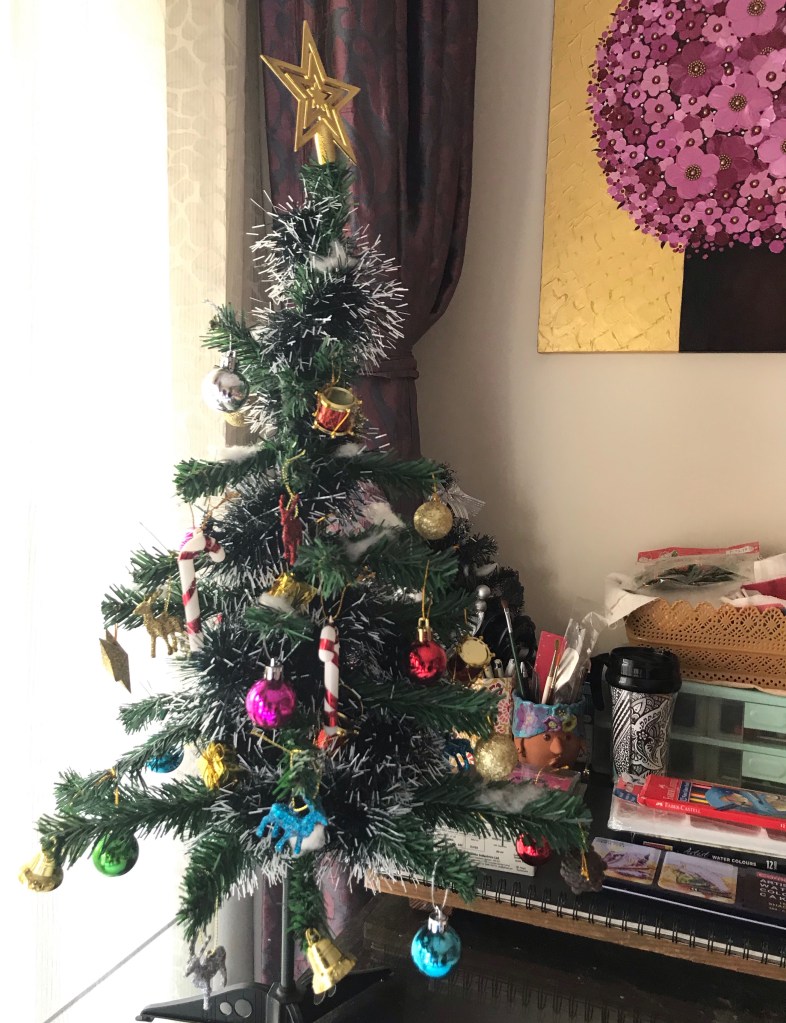
My Desk
My Desk! It’s Christmas 🎄

And we can come back in the New Year refreshed and charged up for another year ahead. Many people also use this time to upgrade their skills, read up on books they always wanted to. I started my Blog this year in September 2020. I have 17 Posts by now. The response to the Blog has been overwhelming. It’s been a good journey with your love, support and encouragement.

So I thought I would do this year in a review post. Helps me connect with the new followers too! Here is a list of the posts I have done on Arts and Crafts so far. You may click on the title to go to the post. All these are listed on my Blog page – ‘The Art Life’

So just in case you missed out on reading any of them, you still can. Please note the Blog page shows only the last 10posts and so to see the previous ones you may use the links above or scroll to previous posts.

If you like reading my posts and wish to continue our association, you may click follow or subscribe to the Blog. This will make the posts come to your Email Inbox and you may read them at your convenience.


Wishing everyone a Merry Christmas and a Happy New Year!

December Calendar with a Christmas Wreath that I created Digitally

This is an Instant Digital Download (JPEG) File that can be purchased at my Etsy Shop NMARTWORKS Picture Format opens with any Photo Editing Software. Once you pay, you can instantly download and use.

Selecting Pens and Markers for your Art

Jingle Bells! Jingle Bells! Jingle all the way! Yay! Christmas is coming! And with Christmas comes creativity. I see such amazing Art and Craft ideas on social media. There is so much one can make and do. It is also the time for Gifts. What is the best gift for an Artist? Yes! Art Material. I did a post on Pencils and Pastels earlier. Based on that many friends asked me to do one on Pens and Markers.

We usually refer to Pens and Markers by the name of the brand. That makes it difficult to do a post without mentioning any of the names. In every country there is a particular brand that is popular and widely used by all Artists from that Country. Ink Artists, Illustrators, Manga Artists, Architects, Interior Designers, Fashion Designers, Calligraphers, Students, Crafters and maybe more – All of them use Pens and Markers for their rendering.

If you have read my previous post you would know that this is an all you want to know information post and not a product review or an endorsement post. I was thinking about how to do this post without sounding repetitive? So I thought it would be best to do this in a Q&A format. I have tried my best to answer all the questions that I think can pop up while buying Pens and Markers. In case you have more questions, please feel free to ask them in the comments.

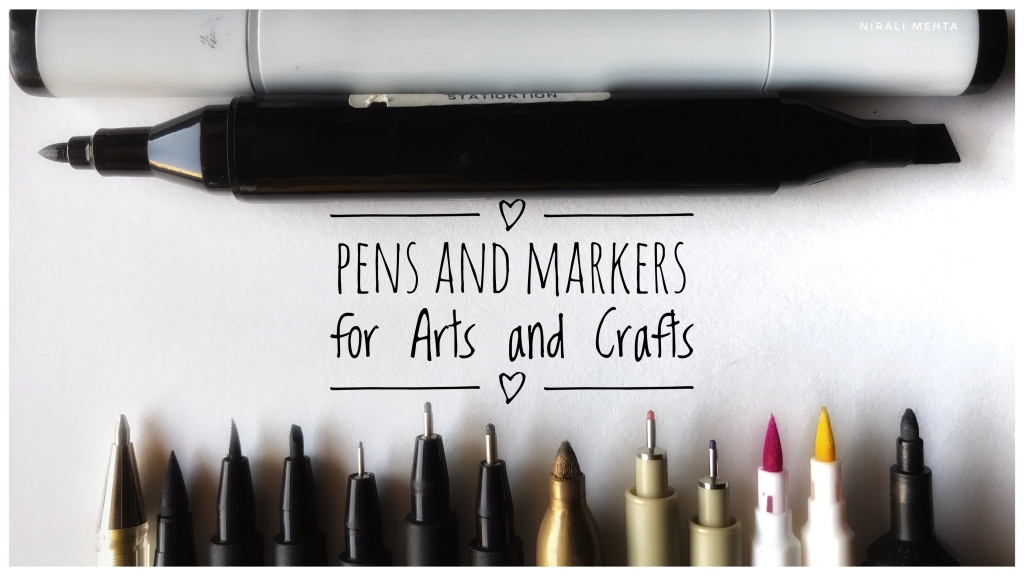
Pens and Markers
The different nibs of Pens and Markers

These are some of my Pens and Markers I arranged to click a picture.

1. Are Pens and Markers different? Hmm, well actually not. They are called Pens or Felt Pens or Sketch Pens or Markers – different names in different countries. They are all Pens available in colours, black, white, glitter and neon shades. The terms are used interchangeably. Like I said we usually call them by the brand name and not as Pens or Markers.

2. Do we get Artist Quality and Student Quality? Technically Yes! But they aren’t really labelled as such. Pens positioned as Artist Pens are Artist quality while the regular ones are Student quality. The pigment, colour and finish for an Artist Pen is better. We also get Industrial Grade Markers. This determines the price points.

3. What mediums are used? We get Oil Based, Water Based, Alcohol Based Pens and Markers. There are Gel Pens, Permanent Ink Pens, Waterproof Ink Pens, Washable Ink and Water Soluble Ink Pens and Markers. The Ink Technology and Ink is different in all of these. That is why two Pens of different brands – both with Waterproof Inks will give different results.

4. Individual or Set? If you are trying a new brand for the first time, it is best to buy different pens individually and try them out. They have testers kept with papers to try them at all stores. I even try the fresh pack Pen before buying to check the nib and ink. The manufacturing dates, import dates and other details are not clearly visible on single pieces. This makes it better to buy them in a set. The drawback is we are not allowed to open a set and try it out. It makes complete sense to buy individual pens to try and once you short list and select which brand you want, it is better to buy them in a set.

5. Which brands are good? I have tried Pens by almost all the well known brands. All of them are good. Brand Loyalty is very strong for Pens and Markers. I have understood that each Pen has Ink that works very well for a purpose. Depending on your use and Artwork you would have to select Pens that suit you by the Trial and Error method. The Art store usually stocks more of the popular ones and of course you know why. Further your location will play a big factor in your selection. Not all brands are available in all countries. Sometimes the Pens that are being imported regularly go out of stock or are priced too high.

6. What do they mean by the numbers on the Pens? The numbers indicate the nib size: for example 01 means a nib for drawing a 1mm thick line while 03 means a nib with 3mm thick line. We also get accented nibs, brush nibs, round nibs and felt nibs. As mentioned above the construction material of the nib and the ink is different in all pens. Further some brands use the numbers for colour coding. We also get dual tip Markers – meaning two different usable nibs on both sides top and bottom.

All in all, it is best to try different Pens on the Paper, carry your own page if you like where you have tried various Pens and buy the ones you think will work best for your work. I have already explained where and how to use each of the mediums in the previous post. Like, if you want the colours to blend: use the watercolour ones while if you don’t want the ink running, best to use the permanent waterproof ink Pens. Even in a simple brush nib Pen we get a lot of variety.

Scribbles Art
My scribbles trying out Pens in rough

The sponge of a brush tip Pen is different by all brands. I usually select a Pen with a medium hardness brush nib. I would like it to turn with pressure but not fray resulting the sponge in tatters. Constantly applying too much pressure on the Pens with very hard nibs can result in sore hands. That is what I meant when I said select Pens that one feels is most comfortable using.

Another important thing to see and note is how the Ink spreads on different papers. Do we get a smooth finish line or a dented one? Does the Ink bleed and spread or create blots and spots? When we apply two strokes next to each other – does the Ink mix or create patches? Does the Ink dry fast when applied or takes hours to dry? Artists would note all this. It makes a difference to their Artwork.

These are all small points but important to check before buying. Many times Art stores mix old and new pens when stocked in the individual Pens section. These pens are expensive and nobody wants to waste money buying a damaged nib or dried up ink Pen or Marker. It takes me at least 15-20mins selecting my Pens even when I know the brands. Last but not the least I compare prices and check for discounts if I buy more pieces. I run out of pens in about three to six months depending on how many Artworks I made. The Inks dry up after about three to five years, if kept lying around.

That lists about all the points I can think of that will help you make an informed purchase decision for the Pens and Markers. Ah! That’s too much. Give me one name and one set – if that is your buying style, I suggest pick any standard well known brand with other Stationery or Art Supplies and buy a set of their Markers. You can’t go wrong. It’s the same for students. However if Art and Craft is your passion, hobby or profession – the choice is yours! Have an Arty Weekend!

Special Tip: Always check the Cap is tightly closed before you put away your Pens and Markers after Use.

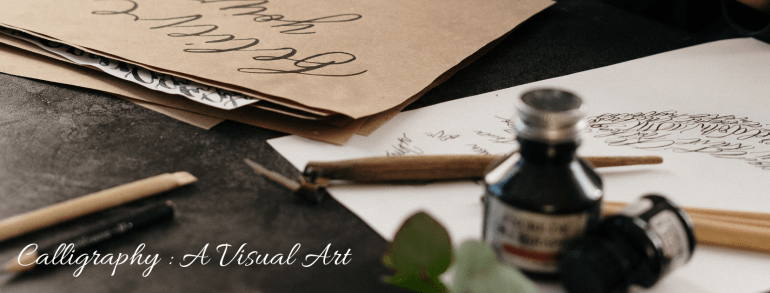
Calligraphy : A Visual Art

It’s an Art, a Visual Art but it looks like handwriting – Calligraphy. In simple words humans made markings with available tools as symbols. Later as characters and scripts developed they began to write using tools available to them. As our writing tools developed, the tools for Calligraphy also changed. Calligraphy is practiced in many countries. The tools they use, the writing styles and scripts differ. I find this art quite fascinating. This one is all about practice, practice and more practice.

I learnt the European Gothic Style of Calligraphy during my school days. Did it help me in any way? My handwriting was decently good and legible. My teacher insisted I use Ink Pens till 5th Grade, after which I was permitted to use ball point pens for writing my notes. I also used Ink Pens for Calligraphy. So it seemed like more fancy writing, just additional handwriting practice in the beginning. I could use it for my school projects. My mom insisted I use my fancy writing skills on Greeting Cards, Gift Tags and Envelopes exchanged on occasions. Gained some love and appreciation there!

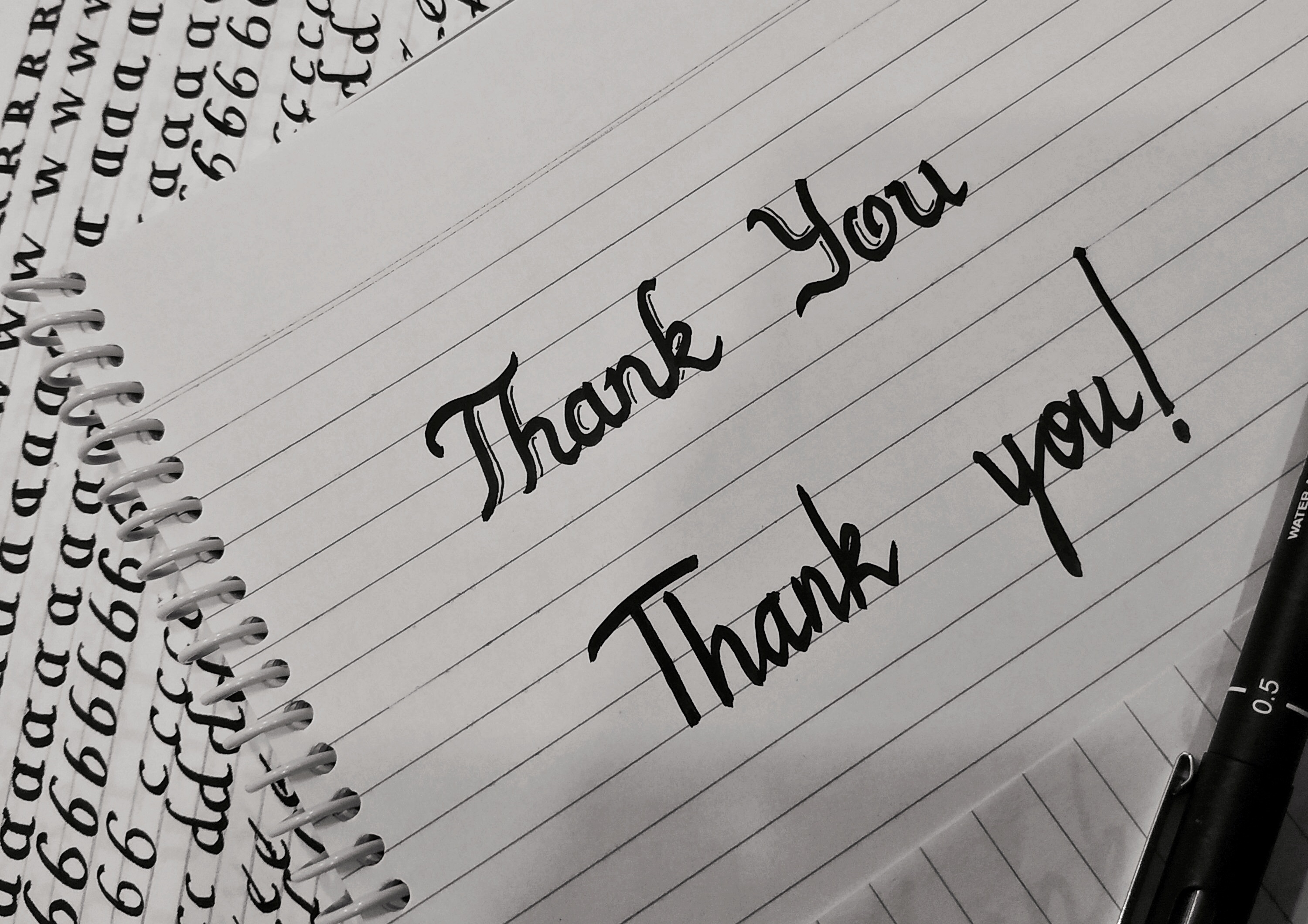
Calligraphy
Different Styles, Different Nib Sizes

Today, I don’t remember writing an entire page by hand in a long time. Fonts – Typography, Logos and Signatures – Lettering and Graphic Designing. Learning Calligraphy helped me here! I agree, we now use digital tools for these but the basic knowledge remains the same. It gave me finesse in holding the pen, the brush and now the digital pencil. The digital sensors correct the breaks in the strokes and make it look flawless. Even I prefer using the digital tools. I don’t think it is easy to compete against a computer opponent in this case. The computer would win! It has made Typography and Graphics much much simpler and faster. This makes a handmade version – handwritten Calligraphy by a Calligraphy Artist a rare find – unique and beautiful; just watching a Calligraphy Artist paint can be a visual treat by itself.

Now even schools are online, we don’t even use the pen for signatures. We are almost forgetting what it is like to hold a pen. Calligraphy is now mostly used to write names on wedding cards. Even for those we now use digital fonts and print them. So why should I learn it? If that is your argument, then I have to say “Learning this Art has helped me improve my creativity and artistic skills. I don’t think I could have done it any other way. I’m glad I learnt it.”

Calligraphy
Brush Pens – Ruffed Brush Tip

Brush Calligraphy is quite popular. Brush Calligraphy and Modern Calligraphy are different. Calligraphy is mostly referred to when using a Pen to write, while you use the brush or brush tip pens to write in Brush Calligraphy. I don’t want to get into the terms and definitions but say that learning one will be different from learning the other. So try your hand at Traditional and Modern Calligraphy as well as Brush Calligraphy. You could be better at one than the other.

Where to start and how to learn this? What material would I require? Is it very expensive to pursue this Art? Do you teach? Wait! Wait! I shall try and answer all these questions. They say ‘Teaching is the best way to learn’. That is why I taught some of my close friends whatever I knew about Calligraphy. It was my first ever experience in teaching. It is always better if you can find someone to teach you this Art but if you cannot then the next best thing is to buy a Book. This Art is all about practising. A teacher would also need just one or two sessions – to show you how to hold the pen, how to make the strokes, show you one or two writing styles. The rest depends on your interest and practice. A book will do that and may be show you more writing styles to practice.

Calligraphy
Calligraphy Art – My Desk

A Calligraphy Set would have one Ink Pen, changeable Nibs of different sizes and Ink Tubes. This is the smallest set. Larger sets with additional tools are also available. A ready set is most likely to include a book with at least one writing style. This will be a very basic one. Then you can download practice sheets available online. We used regular Ink Pens. We bought Calligraphy (4-6 different size) Nibs. See the loose nibs in the picture, I still have them. The Ink was permanent Blue or Black Ink (regular Ink Pot). We even got nib cutters to cut the nib. Unfortunately loose or only Calligraphy Nibs are not available anymore. So you could buy the most basic Calligraphy Set and a good book with different writing styles and practice sheets.

Wow! Why are these Ink Pens expensive? The nib of a Calligraphy Pen is accented. It gives a thin upstroke and a thick downstroke. For larger font size one needs a broader or larger nib size. To begin with nib sizes 1& 2 are good to write in regular handwriting books. The red blue ruled books we use when we learn handwriting are perfect to learn Calligraphy too. Then of course you would just need a single line ruled book or no lines as you progress. This part is similar to our handwriting practice books.

Calligraphy
Calligraphy with Markers

We get sketch pens or markers with accented tips too. These are used for Calligraphy. The difference is the tip is much softer and so the pressure to be applied is different. The pressure applied to write with a writing instrument that has a metal tip, wooden tip or fibre tip will always be different. Similarly brushes are used for Brush Calligraphy. We get Brush tip markers too. It is cheaper to get markers and we can always use them for other Arts and Crafts. One of the reasons Brush Calligraphy is popular. If Calligraphy really interests you and you wish to take it to another level, you may want to invest in a Traditional Calligraphy Pen and perhaps get trained with a professional Calligraphy Artist.

One special tip here : All these pens will be labelled as Calligraphy Pens on their pack at the Art Store. So the onus is on us to select what we are looking for. We definitely don’t need all of them. Best to buy a book and then the Pens if that makes more sense. Choose the writing instrument you are most comfortable using.

The Ink, the Paper, the Writing Instrument and most importantly your Style of Writing. All of this matters in Calligraphy. Even if I write the same thing, with the same pen on a different paper or with different ink or by applying different pressure, the result will be different each time. Hence only with practice and experience an Artist will be able to create those amazing works.

All said and done. This amazing Art seems to be dying out and getting replaced with digital forms. It may be difficult to find a tutor but don’t give up. In the end it will all be worth it – an enriched learning experience. Have an Arty Weekend!

Rangoli Art

Diwali is here! Diwali is an Indian Festival celebrated for 4-5days. Like every other Indian Festival this one has a story too. It was a celebration when Prince Rama returned home after completing 14yrs in exile and defeating his strongest enemy Raavan. So his whole Kingdom – The Kingdom of Ayodhya (then included India) was decorated with lights and colours to celebrate his arrival and victory. We also celebrate a New Calendar Year. Everything is closed for the Holidays just like Christmas- New Years. We exchange gifts, sweets, wishes and celebrate.

Rangoli Art
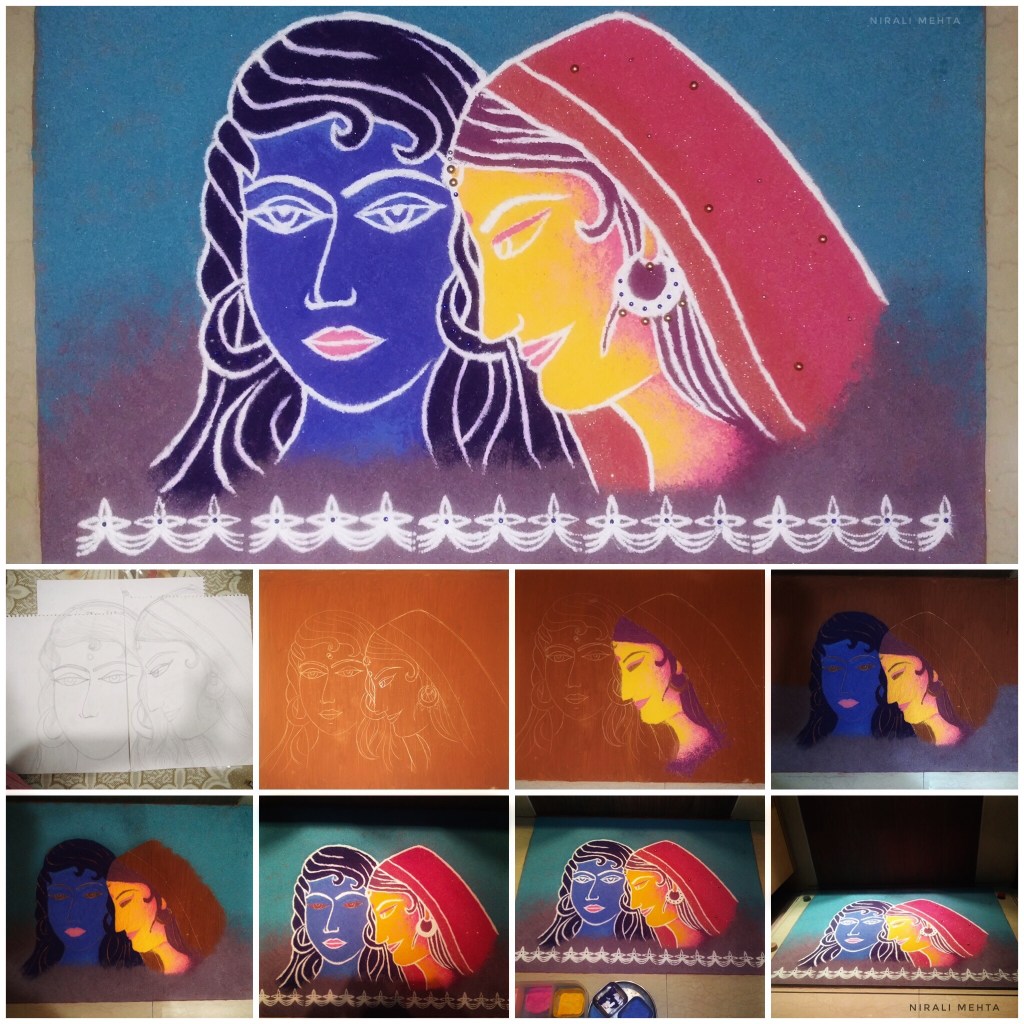
Diwali theme Rangoli – Ram Sita

My favourite thing about Diwali is ‘Rangoli’. These are artistic designs we create on the floors with materials like rice paste, flowers, coloured salt, white or coloured stone powder or paints. Almost every home and office makes these designs at the entrance. It is believed to attract positive vibes. Different types of Rangolis :-

1) Floating Rangoli with Flowers and Floating Diyas

2) Rangoli made using petals of different Flowers

3) Rangoli from Quartz or Stone Powder

4) Kolam – White Powder usually but can be coloured also

5) Alpana – White Paste from Rice flour or Paint

6) Readymade Rangoli

They are different in terms of the material used and the designs. I have tried my hand at all of these at some point of time. Beginners can try the flower ones and floating ones. They are relatively simpler. With a higher level of difficulty one can try Kolam and Alpana and then of course the traditional regular colourful designs done with coloured powder. Shading and making realistic paintings are of the highest difficulty level.

Rangoli Making
The making of my Ram Sita theme Rangoli Art

We get various tools that help us in making the Rangoli. We also get stencils to assist the process. More so we even get ready made stickers or Rangoli pieces to assemble. One such variety is the the one with decorated acrylic pieces or cardboard pieces. These are just to be placed on the floor as per your choice.

‘Art remains, only the tools keep changing’

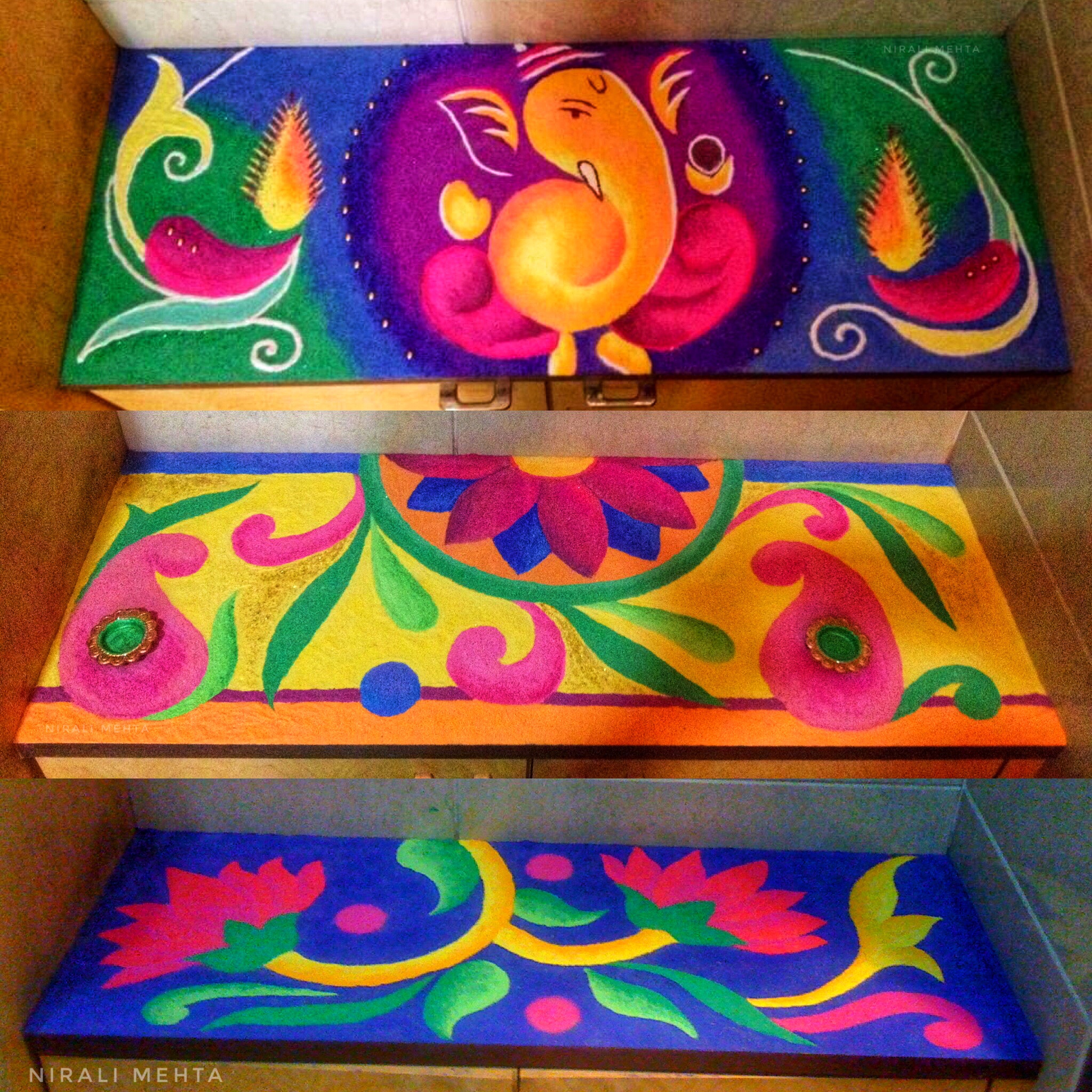
However I don’t get my creative satisfaction until I make one like the traditional ones with coloured powder. The Internet is overflowing with tutorials and designs for Rangolis. I do browse through to find some ideas and inspiration, then add my hard work and special touch to them. That is why I say ‘Art remains, only the tools keep changing’. Sharing my Rangoli Art works.

Rangoli Art
Rangoli Art – I made these too 😀

Wishing everyone a very Happy Diwali and a Prosperous New Year! I do have some Digital Downloads at my Etsy shop with Diwali designs. Creative Adults are all children at heart. So here’s wishing everyone a very Happy Children’s Day too! Have an Arty Weekend!

Be Creative! Do Not Copy – Copyrights in Artistic Works

Looking up something! Type in your query in the search bar and within seconds, a million responses to your query will pop up. During my school days my teacher would collect drawings and paintings from various places to show me and ask me to practice. As they say ‘No one is born knowing it all. We have to see, learn or experience it to know better.’ That task in today’s world can be done from the comfort of our homes with just a click of the button. Very little effort or almost nil compared to earlier days. Then again there is a universal truth that no one likes to be copied – not even someone who themselves copied. I have read the ‘Do not Copy’ disclaimer on pages of Artists who have otherwise copied Artworks of other Artists.

Well then, is it possible for everyone to draw from their mind? Are they really inventing and innovating something totally new each time? All these arguments happen. They ask me ‘So are you really for or against Copyrights?’ I would say both. And the Copyright Law was also works like that. It means a person who has put in their hard work, time and money into creating something must receive their due credits for it. Nevertheless people must be encouraged to learn from one another to build on something existing for the development of the society as well. Hence certain permitted use of copyrighted works.

The Berne Convention is the International Agreement governing Copyrights and 179 nations are Parties to it. It formally mandates the details of the Copyright Law. The Digital Millennium Copyright Act intended as anti-piracy law also needs to be read alongside the Copyright Laws. If I continue talking in the formal tone or legal language, not many people will understand. I wanted to simplify it so that even a person who is not from the field can easily understand.

Here is what I learnt studying The Copyright Law :

It is not necessary to register your work, although registration makes it easy to prove your right in the Artwork. Reading up a little about Copyrights can definitely help – to protect yours and to avoid infringing someone else’s. Website of the World Intellectual Property Organisation (WIPO) shares a lot of information for public awareness about all Intellectual Property Rights. The symbol for copyrights is © followed by the year the artwork was created in.

So if you like someone’s Artwork, appreciate it and like it. Do not call it yours! That is stealing. Of course like any other kind of stealing it is a wrong doing. The law is to protect the creators from such theft. Every Artist has the right to be called the creator for their work and no matter what rights they license or surrender, this right stays with them.

If you imitate an artist, dedicate it to them, credit your references. Always remember you will be known as an imitation and an original is always worth more. The only time it is ok to imitate is when you are learning. That comes under Fair Use. However if your account states ‘artwork for sale’ or ‘open to collaborations’ or ‘artist – do not copy’ then your intentions are clear. It is not considered Fair Use. If it is fan art or a parody, it has to be mentioned clearly. The purpose, nature, amount and the monetary effect are all considered to know the intention.

Copycat- Mindless Act of Copying

If you were inspired by someone’s Art. And you used your creativity to create something different but similar. This is determined by substantial similarity test. So if the work looks very similar to be mistaken as one for another it might be considered copied. The new image search technology is so good that works with substantial copying are shown in the ‘works similar to yours’ search results right away.

One important thing to understand is Copyrights is about protecting the right of the creator so that he earns his rightful due from his work – in monetary terms. So if you are selling and making money by copying other people’s work, it may land you in trouble. I really don’t know if you wish to put your business at stake by doing something like that.

Social Media have a ‘Report Copyright Infringement Button’ where one can report if they feel their rights have been infringed. You would have to prove your rights in the Artwork. Digital image scanning with technology like Google Lens makes it easy to spot copied artworks. There are apps and softwares for these kind of searches. Companies have full time professionals dedicated to each of these tasks. The Media and Entertainment Industry is one of the major Industries across the Globe. Their works are protected under Copyrights. I think among all the other Acts of Intellectual Property Rights the Copyright Act is very well drafted and very adaptive to the changes.

Always repost with credits. If an Artwork has a watermark or a logo, it means it was to discourage from copying. That doesn’t mean works without watermarks do not have Copyrights. Copyrights are valid up to 70yrs after the death of the author, after which artworks fall into the public domain. After extensive lobbying by Disney ‘The Mickey Mouse Protection Act’ came into effect thereby protecting works of corporate authorship till 120yrs of creation or 95yrs of publication whichever is earlier.

Last but not the least, there is a school of thought that believes in sharing their works by giving some access and rights, so that others can use their works. Creative Commons let users use their works for free to build other new works. I think these have helped many creations and innovations. Some really amazing ones.

There is also something called Open Licenses where a standardised license with pre-determined conditions is used to license Artworks. By clicking the ‘I agree button’ we agree to their Terms & Conditions. Whether the Copyrights Model works or not, whether such protection is necessary or not – I don’t know. All I know is there is something called Copyrights. So be creative and do not copy!

Have an Arty Weekend!

Three Arts that you can give a try – Doodle Art, Zentangle Art and Mandala Art

It’s been tiring juggling work from home alongside family and home responsibilities. The last few months have been difficult for all of us. We need activities to do individually or as a family. Something to refresh and take a break. In the process if we get to learn and grow, it would be a bonus – right! Stepping out is a big No-No. That leaves us with very little to do apart from the mundane daily tasks. In this article I am sharing three Arts that I feel everyone can give a try! Doesn’t need any prior training or experience and are very popular.

These are my top three because; Materials required for these would be easily available at home. In case you wish to purchase the material locally or online, it is standard and easily available. The selection is quite simple and specific. Another reason I like these is because there is no right or wrong here, just beautiful Artworks. They don’t have to look like anything or have any logical sense. Loads and loads of free online tutorials and reference material is available. Further all of them help de-stress, develop creativity, improve skills and most importantly give a sense of accomplishment – a feeling of having created something. It builds confidence, develops brain power and directly or indirectly keeps one more joyful and happy.

So here is my list :-

1) Doodle Art : All of us would have tried drawing something at some point of time. Whether it was good or bad doesn’t matter. Without making a conscious effort or scribbling while your mind is pre occupied with something else is called ‘Doodling’. The Art is called ‘Doodles’ or ‘Doodle Art’. It can help express emotions. I scribble cute animals, flowers, hearts, stars and anything else that comes to my mind in my notebooks. These were my school, then university and even office notes and not drawing books. I memorised the data with the help of those diagrams. Making doodles on otherwise boring black white pages helped me do a recap of the matter on that page. In the exam we can draw these on the rough page or if it is a fair diagram, representing it graphically gained me extra marks for the answers.

Leaves Doodle Art
Leaves Doodle Art – My scribbles

Even today when I do brainstorming for ideas, I scribble it in my notepad. I do post my midnight scribbles on social media. Emojis, Infographics and Designs are some of the applications that come to my mind. It is continuously drawing whatever comes to your mind without a logical explanation or making sense out of it. Many people often mistake it with hand drawn Art. It requires only a pen and paper. For the first time we can search the Internet to make a beginning somewhere. Draw anything you like or connect with. It will not look the same. Big ears, small eyes everything is allowed. It is your art and you decide how you want it. It is all good as long as you like it.

Zentangle doodle Art
Zentangle and Doodle Artworks that I have done

3) Zentangle Art : Patterns or Designs made by repetitive lines or curves. These are used to fill objects. We don’t need to know shapes, shade and light, perspective or any other information about drawing. For the first one,draw small equal squares using a ruler and pencil or pen on your paper. Keep a constant white border between these squares. Then draw any combination of dots, lines and squares to create patterns or designs. A simple challenge to make it interesting would be to make sure no two patterns on this page are exactly the same. They can be similar. Here again these are designs and fills. There is no need for it to look correct or real. Each piece is a work of Art. I once did these patterns on a sheet of paper, removed photocopies or prints of the Art, laminated it and used them as placemats for my home. I have made bookmarks with these too.

Mandala Art
My Mandala Art

4) Mandala Art : Mandala Art has religious significance and origin. However often people just refer to a circular pattern when they say Mandala Art. One can try this Art without any connection to the religious beliefs – just as a random circular geometric pattern. To draw this we would need a pencil, a pen, paper and measuring tools to make a grid. If you wish to make it colourful you can use colour pencils and coloured pens of your choice. We need to prepare a grid using a compass, protractor, ruler and pencil. After this there are a million permutation combinations or possibilities resulting by connecting the intersection points of the grid using lines and curves through repetitive patterns. There are patterns and designs and represent nothing otherwise. I draw a lot of these both by hand and digitally. They are considered therapeutic. Can be used to decorate different things as well.

Mandala Art
Mandala Art with white pens on black paper – Reverse

If we look carefully we will find so many patterns by Mother Nature. The number of possible combinations in patterns and designs are so vast that one can definitely find a few strokes that are easy and manageable. The Artwork can be a combination of these. There isn’t any need to follow any specific rules to classify the Art as just one of them. Many people use the terms interchangeably also. I have a lot of practice and training in these but I am sure even beginners will be able to do a pretty good job. There is nothing like right or wrong here. I understand it is difficult to know where and how to begin with when it is the first time. As we do more, our hand or our strokes develop and we grow. Keep your first piece next to something you made after a few months of practice and you will notice your growth.

DIY Zentangle  Art
DIY Zentangle Bookmark Pattern
DIY Mandala Art
DIY Mandala Art with grid making

Apart from the above, the one important thing that you will definitely need is your zeal and enthusiasm for Art. The idea was to introduce these and develop your interest in them. I hope I managed to interest you enough, so that you look up and give the Arts a try. These Arts require focus and patience. So to begin with I would suggest selecting simple projects. I have shared two DIY projects you could try. I have purposely kept them naturally imperfect to show that it doesn’t really matter. The only thing that matters is : You enjoy! Have an Arty Weekend!

Serious about Art : The way ahead

In early times, people did Art to decorate their homes and objects of everyday living. It could be an individual or a group of people collectively working on something. It was mainly Designs and Patterns that could be done by more and more people. Then we came to know of better ways and did more realistic Paintings that conveyed stories. Sculpting, Photography and now Digital Art ; there is always something new and trending. Art is a way of expression. People express their feelings and experiences. Arts and Culture influence each other to a great extent. It is like they are interwoven. Internet and Globalisation made it a boundary less world. This opened up infinite opportunities in Art as well. For a creative person it is like a vast ocean. There is always so much too learn and do. I like to read up, see, learn and better my skills everyday. We are truly blessed to be able to have easy access to so many resources now.

“To practice any art, no matter how well or badly is a way to make your soul grow. So do it” – Kurt Vonnegut

Art is my passion, it’s Life. Your reason could be different : a stress buster, a hobby, a way to be social, helping your child with art at school, being a professional artist or having a part time or full time career. However if you are serious about Art, it is always better to take up formalised training. You have the talent, that’s super. Now all you need is the wisdom. I see many people write ‘Self Taught’ in their bio. It’s great! But just imagine! if you are so good when you learnt only by looking, how awesome will you be if you have a mentor, a guide or a teacher formally teach you!

I would say it is like a Tree. I was born with a liking, aesthetic sense, creativity and a good hand for Art – that would be the seed. I have to water it everyday – that would be practice. I have to add manure, fertilisers or food – that is knowledge. What I gain from this journey or growth over the years is wisdom. That makes me a full grown Tree. Don’t be in a hurry to monetise your work. Learn whatever you can, try your hand at different Art Styles. My friend told me ‘My daughter is really good at doing a flower, she keeps doing it.’ I think that’s absolutely ok but at least try the other things. How do you know if this is your best work or if you can do better unless you try?

By all means make as many mistakes as you can in the learning phase. You know what they say right ‘I didn’t make a mistake, I learnt a 100ways it could go wrong.’ It is True. Besides, being an Artist is also about letting go of the fear of being wrong. For an Artist, what makes him or her different from another Artist is himself. It is difficult to separate an Artist from his work. I could put it as ‘that one special move that you are so good at, makes your work different from the others’. That is why I feel if you are serious about Art, you would invest in yourself.

My artworks during school days

Most Art Schools and Universities have a system of grading and examinations. The format is similar for most Art Institutes. Knowing this early on can help prepare for the way ahead. Broadly these are five subjects. We can’t be selective and be very good at just one of them. Need to be relatively good at all of them. The subjects are:-

1) Nature Drawing – Drawing and Painting Flowers or Nature. They give flowers in the exams because they have to give something easily available, as there to so many students. It is about actually seeing these flowers in real and painting them. Use Watercolour. The more realistic it is with shadows and highlights, the more points you can score.

Preparing for the Art Exams

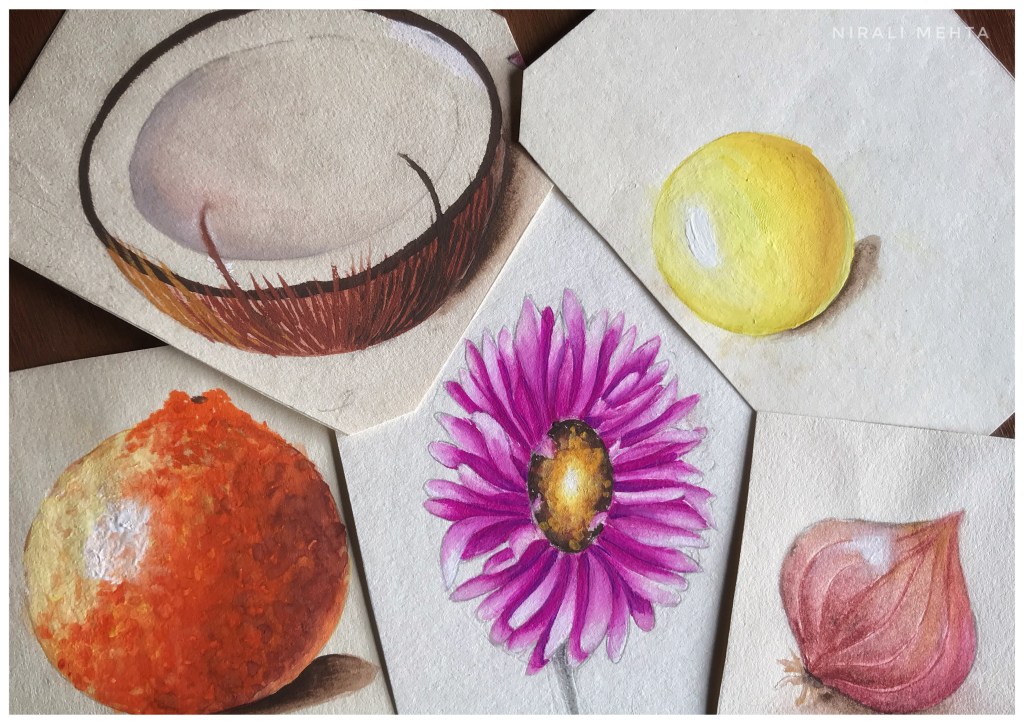
2) Object Drawing – Painting daily life Objects. Each material has a texture. Example the skin of an orange vs that of a coconut. Note and observe these details to make it look more realistic. Another way to score better is getting the right perspective. Were you looking at the objects from the front, right side, left side or extreme corner – your artwork should reflect that.

Memory Drawing – Fishermen

3) Memory Drawing – Drawing People and Places. It is called memory drawing because we are expected to draw what we saw by recollecting the memory. Select a topic which is something you have experienced or seen in real life. Obviously it becomes easier to draw that rather than something you just saw someone else draw. It will make your work more real and different. Creatively highlight your strengths by drawing what you draw best. Complete the background. A complete picture always makes a better impression.

4) Design – The combinations and possibilities in Patterns and Designs are endless. Showing usability of a design or object you are designing scores a brownie point. Commercialisation and mass production of a Design is something most people look out for. For ‘Freehand Drawing’ you are given a design and asked to recreate it. Matching the colours, lines and curves becomes important. Basically the examiner wants to know how well you can replicate the design given to you.

Designs and Lettering

5) Geometry and Lettering – Geometry is about precise measurements. How well can you convey the meaning of the word, keeping it easy to read while having a unique font style? Lettering and Good Type done by hand requires a lot of handwriting practice. Commercialised version we all know as ‘Logos’. This is different from Calligraphy.

Designs and Lettering now most often are done digitally in the Industry for precision. However they will teach you to do these by hand first. It is always better to learn both methods – doing it by hand and digital.

Information is readily available on these subjects. So I thought I would share some additional tips which can help you score a few brownie points in these subjects. Use Gouache Colours for a nice neat look. Make sure you can complete your artwork in the given duration. Last but not the least practice. Try to do better than yourself each time. Taking up work that challenges you makes the learning interesting.

One request, please don’t use help from the digital tools – they will only get you followers on social media, nothing else. During my school days we were not allowed to use any measuring tools like ruler or compass except for Geometry and Lettering. We learnt how to draw without using these. There are methods how artists keep a scale with their eyes, which your teacher should be able to teach you.

I cleared my Intermediate Grade Exams in Art scoring a ‘Grade A’ and merit rank. Intermediate Grade Exams are senior level Art Exams conducted by the Maharashtra State Board and lakhs of students appear for it every year. You may or may not appear for the same exams but training in all these subjects surely helps. I scored ‘Grade B’ in the Elementary Exams (Junior). Then I had my teacher train me. The results you can see.

I also feel this system of training is holistic which creates a good base for taking up any specialisations in Visual Arts and Allied Arts. Once we know these, it becomes easier to pick up any new trends in Art. Further even to get into a good Art Institute we have to submit an Art portfolio on these lines or appear for entrance exams on these lines. So if you are serious about your Art, this is the way ahead! Have an Arty Weekend!

Please Note: All the artwork shared is my actual artwork I had done during my school days when I took these exams. Our references were books and previous years question papers.

Artist on the Go!

Ever since I can recollect my Art kit goes with me wherever I go. It evolved over the years, a few tools got added, a few subtracted but till date I have a pouch that has my pencils, pens and colours that go with me even if I am on a holiday trip. I don’t know how that sounds but it is like packing toothbrush and essentials for me. I guess that is what it is when you are passionate about Art.

A sketchbook or some paper sheets and some Art Tools is what my portable Art Kit includes. Initially the Art kit would include pencils in 2B, 4B and 6B lead tips and an eraser. This much is enough for making Art using the pencil shading technique.

Then I added a box of watercolour cakes with primary colours and two round brushes – one in size 2 and another in 6 or 8, a black Ink brush pen or any outliner pen that you would like to use. This much is enough for making Watercolour Art. I understand you know that a pencil and eraser to draw or make some marking before colouring are already there.

The Art kit that I now carry along with me is a combination of the two above. It includes the three pencils, a magic eraser, Ink pens for Artists in three nib sizes along with my sketchbook. Sometimes I also take along the watercolour box and a brush. All this fits in a pouch or zipper pencil case. It does not contain water or any liquids so it is suitable to carry easily in the handbag while travelling. Something like a makeup kit. Pointed objects like compass or rounder and sharpeners are not allowed when you travel by air, so make sure you don’t carry them along if you are travelling by air.

There are trips planned for artists now a days and many artists do Art on the go. So the next time you see a beautiful scenery and want to put it on paper or just want to pass time at a waiting lounge you know your Art kit will come handy.

Sharing a some pictures from my A5 sketchbook done on the go!