Impasto – Painting with a knife

Yes! That is the term used for a painting technique – ‘IMPASTO.’ Impasto technique in simple words is painting with a knife. A painting knife is different from a regular knife. The blades come in different shapes and sizes to create different textures. You could relate better if I named a famous artwork created with this technique – ‘Starry Night’ by Vincent Van Gogh.

Impasto technique is commonly used in paintings of the ‘Abstract and Impressionist styles’. Instead of using a brush to apply paint on the canvas, we use a knife. It is a metal piece (flat) not exactly sharp but more of a shaping tool with a wooden handle. We can create a variety of textures using it. The texture created will depend on the pressure applied and how the knife is held by the artist.
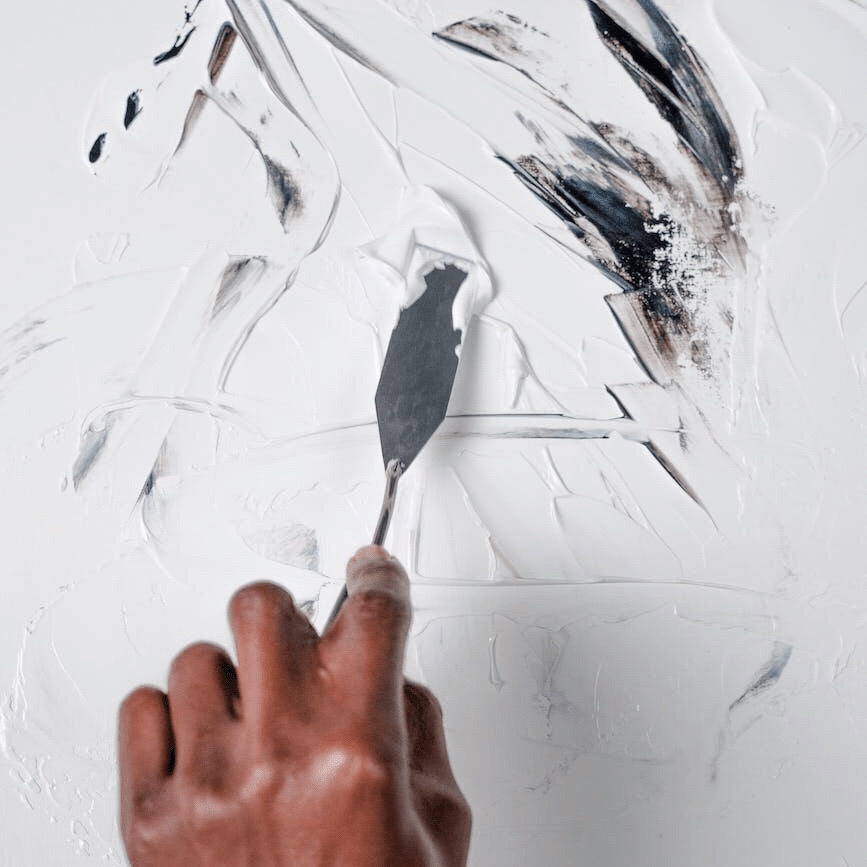
Showing textures of Impasto
Holding the Knife to Paint

Hence, the texture created by two different people using the same materials can be different. The method of application is what matters. This method is not exactly taught. The artist must try different strokes to see which one he/she is most comfortable doing. Like they say each one of us has that one special movement in which, only we can do best.
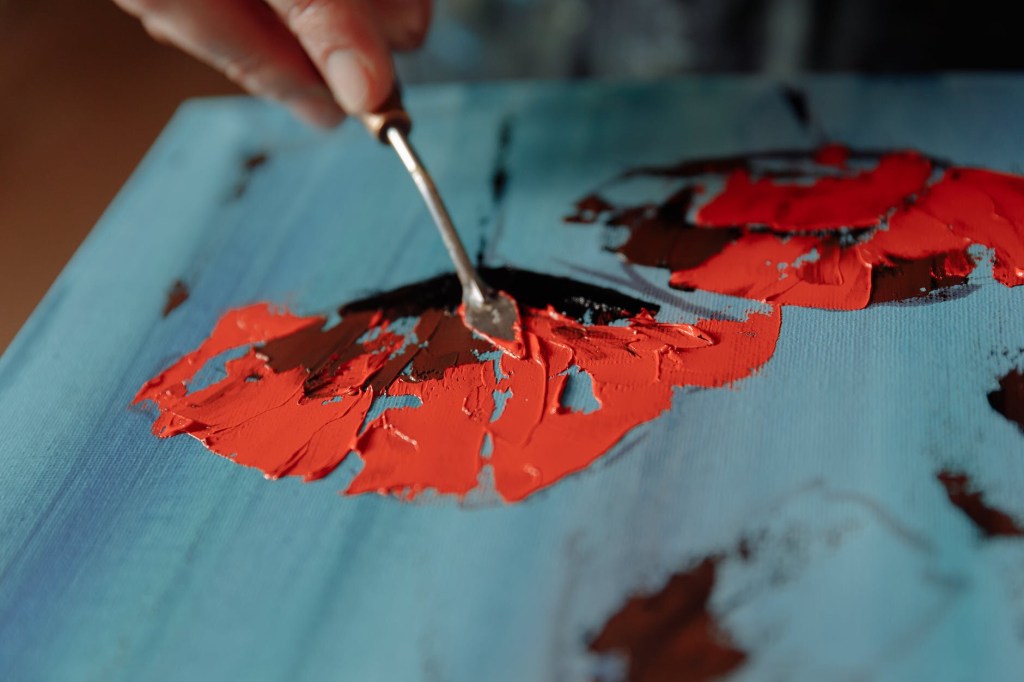
Demonstrating the Impasto method
Painting on the canvas

Initially, when I learnt this method during school days, we referred to it as ‘texture painting.’ This term expands the scope to use other tools for application to create textures with paint. For example, we can use the blade of a cutter or a simple piece of ply laminate. These can be sharp, so please be careful while using them. Ever noticed a worker applying a white base (putty) or cementing the cracks in the wall?
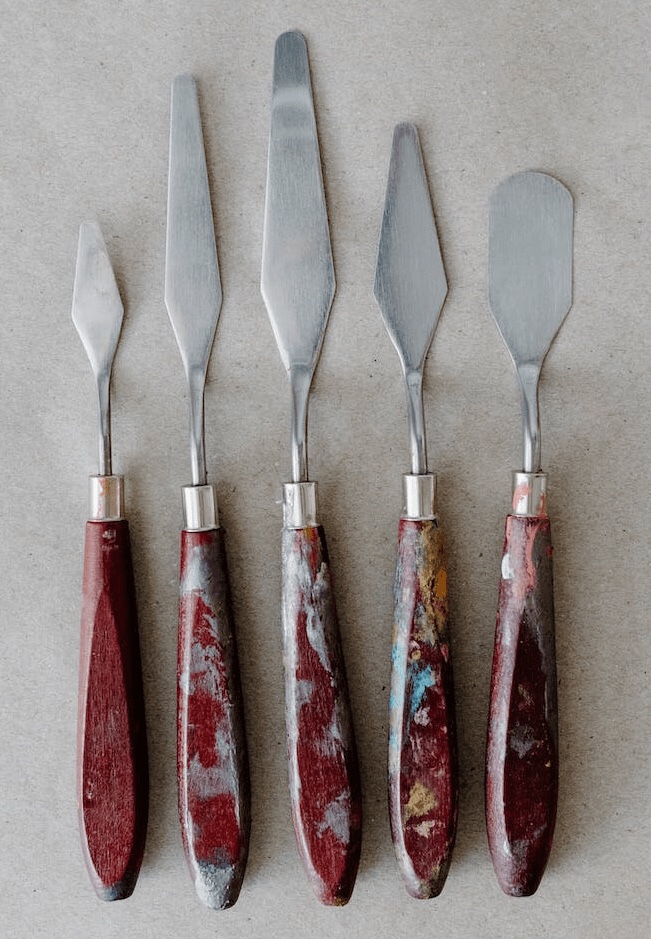
Variety of Painting knives
Different blades of painting knives create different textures

I know, to be safe please use knives and not these other things. All I meant was that we can create textures with anything, even combs. It’s like the application of icing on the cake. In this case, think of paint as the icing that we are using. I gave that connection on purpose. The consistency or feel of how the paint should be for a good output can be understood through this connection- soft, quick drying and thick.

Painting with a Knife

This painting technique gives a 3D-like output. There is no need to paint various layers. We only need to give a background colour to the canvas and then we can paint directly on it. Impasto is originally done with oil paints. But it’s expensive and takes very long to dry. I have tried this method with gouache paints (on paper) as well as acrylic paints (on canvas). Both work very well in their way. The paint dries quickly and the artwork can be completed in one go. We also get various mediums that we can add to acrylic paint in order to enhance this work.

My Painting using the Impasto Technique

Textures can also be created with ‘Guesso’ at the beginning for the background and then painted. However, most of the time we just directly apply a nice rich thick coat of paint directly to the canvas. Please note, this method uses a lot of paint. So make sure you are stocked up with enough paint in the colours that you need. The exact amount depends on the artist’s usage but the amount of paint that is used in a painting with this method is almost 3-4 times more than a regular method.

A trending art that uses this technique but with different material is ‘Russian Sculpture Art’ or ‘Russian Sculpture Painting.’ Readymade ceramic pastes in various colours are available in the market. These are used to make florals. Do check this art on the internet if you heard it for the first time. It isn’t exactly sculpting but it uses ceramic paste with the painting knives.

Try different textures on small pieces

And finally, where will I get these knives? In earlier days artists would make their knives but we are in the modern world now, right? That means it is available at almost all stores selling art material. It is also called a ‘palette knife’. It is barely sharp enough to cut the paint. So even children can use it under their parent’s or teacher’s supervision. Go ahead and try a new technique of painting this week! Have an Arty Week ahead!

A Photo Frame – It’s Handmade

Click! Click! Hehe! We don’t get to hear this clicking sound anymore. The cameras are silent but we still click as many pictures or probably more. Now that our phones have a very strong camera lens, we like to capture every memory.

It is a memory, it is special. Then why let it remain in the phone. Let’s print it and put it in a nice photo frame. That is my topic for today’s post – a very simple easy DIY Photo Frame. It also makes a great handmade gift to share with your loved ones.

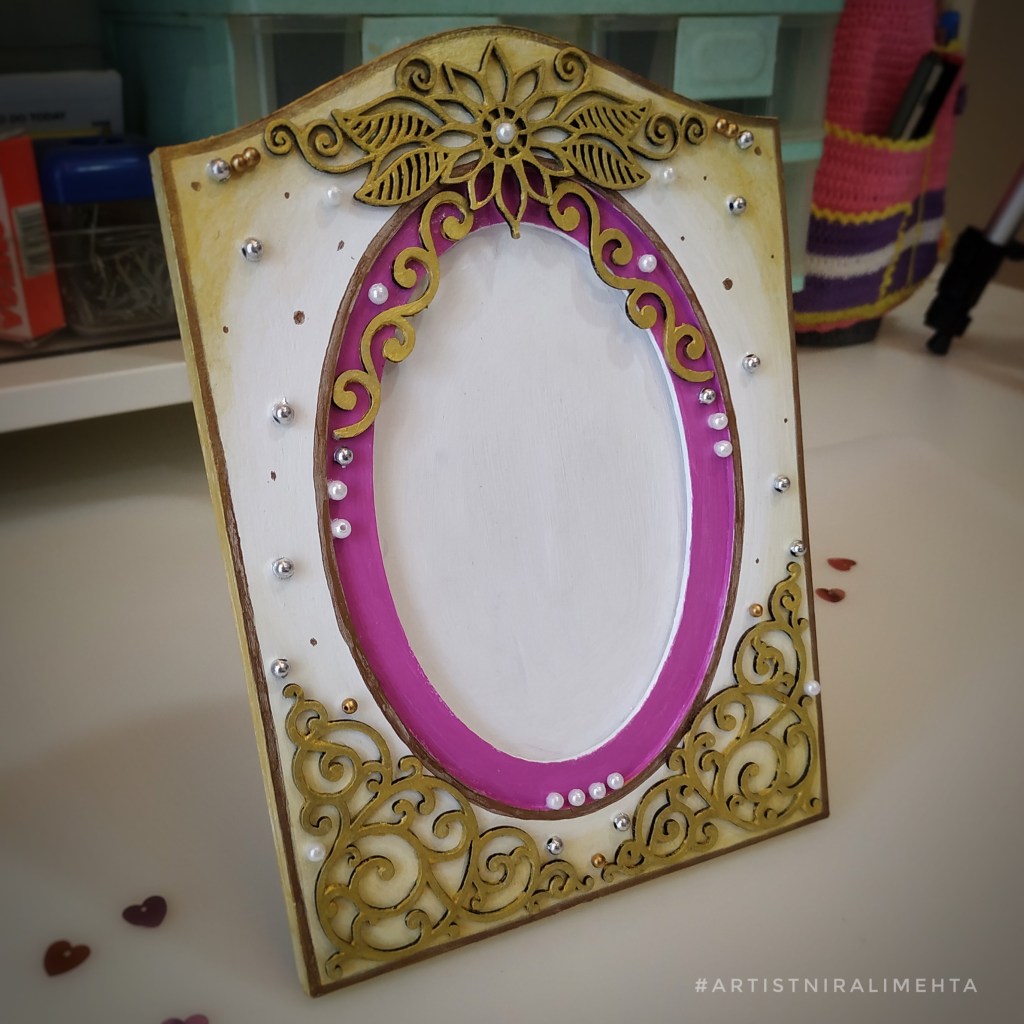
Handmade Photo Frame
The Photo Frame that I made

Earlier if I had to make something like this I would have to buy mount board or ply and then cut and make the frame myself. Also cut such vintage design decorative pieces. I agree, it wasn’t everyone’s cup of tea to get a good finishing at these. Tedious too!

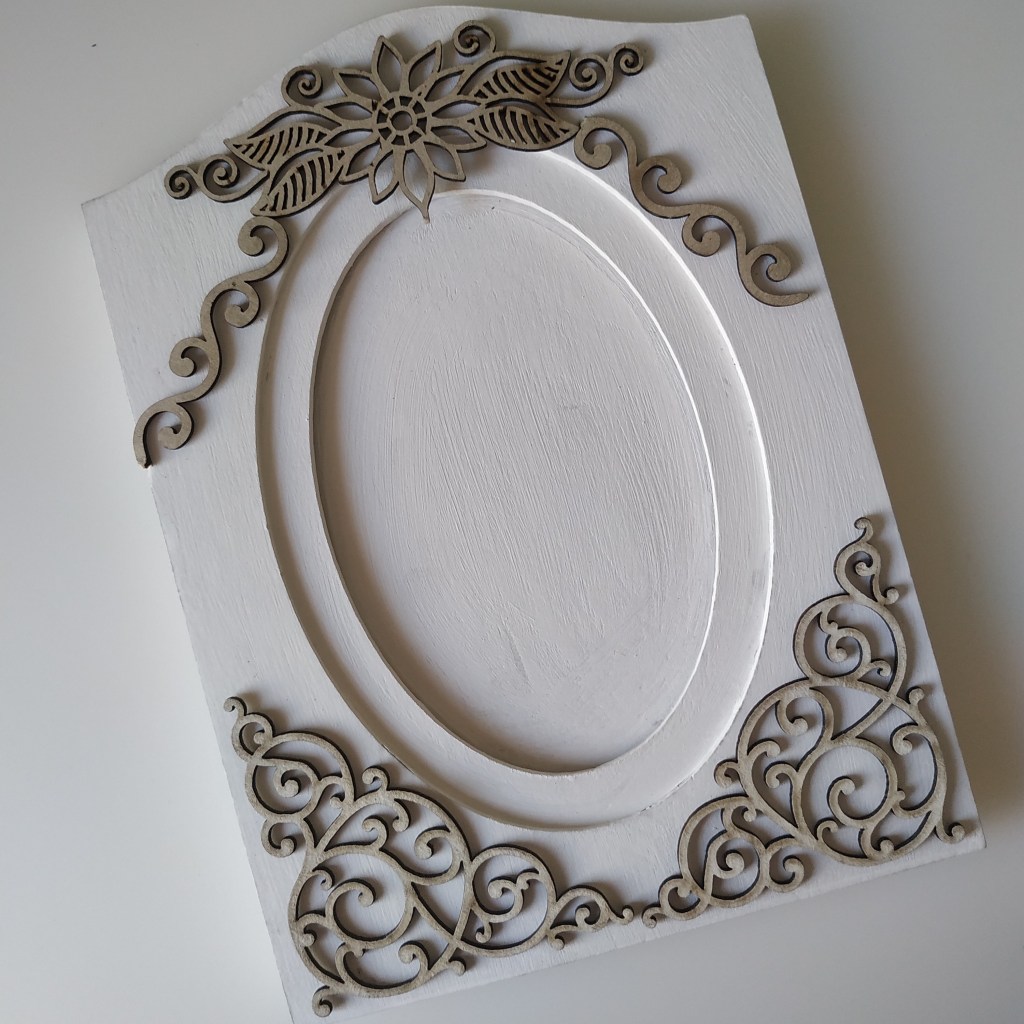
Now we easily get ready made stuff like plates in different shapes, pen stands, photo frames, coasters, alphabets and much more. The art and craft stores stock these. Further we get a large variety in primed chip board pieces. These designs are laser cut from plywood or board. They are primed ; meaning painted with a base paint. Won’t require gesso or primer to paint. We can directly use acrylic paints.

The material is plywood or fibreboard for all of them and hence for any craft or painting it is the same family. I did do a project earlier with the same materials – A Nameplate and Coasters. In case you wish to read those posts, the links are at the bottom. Yes! The material is mainly used for Mixed Media projects. Some stores are offering DIY kits with these.

I think one can always get more creative and use them differently, isn’t it! A big smile 😀 How is this project different? The method of painting is different. This method is super easy. Anyone just anyone can make it and it will still be a masterpiece.

Materials Required :

  • Ready Plywood Base – Photo Frame – any design of your choice
  • Decorative Primed Chipboard pieces – any design of your choice
  • Acrylic Paints and Brushes
  • Embellishments
  • Varnish for Acrylic – Spray or Liquid – either will do
  • Your enthusiasm to create something new

Minimum materials and most of it will be from your paintbox. No need to buy them. Make use of whatever you already have at home. Let’s get started! Put enough newspapers or plastic to protect your table or floor, wherever you are working. We do spill paint while doing this.

Material for Project
Ready Base and Chipboard Pieces

Special Tip : Cut out a rectangle from the plastic envelope of the frame or chipboard pieces. The size of the photo to be inserted. Insert it in the photo slot to avoid it getting blocked due to paint. This way we give a protective base and avoid colouring that portion.

Further we can use stencils to create textures on the base. We can use Tape to create designs as well. Pack the edges with Masking Tape or Washi Tape to avoid colouring the wrong side. We can even paint the edges in a different colour. Remove it once done. I will do a post on using tape soon.

Photo Frame - DIY
Trying and deciding their placements

Arrange these pieces and roughly decide their placements. Next select the colours. Individually paint all the pieces in any single colour. Here, I have painted the chipboard pieces in Gold. Chipboard pieces are by the brand ‘Little Birdie’. We can shade them but they are already 3D and hence I feel a single colour looks better.

Making a photo frame
Work in progress

The frame base is painted in Titanium White. One edge I have painted in Pink – Medium Magenta. After that I have dusted the frame with the same Gold used for the pieces. Gold on White is blended to look like gold is dusted on it. Finish the edges and back side likewise. Acrylic colours are painted in layers and blend even after the base colour dries. Use a wet brush only if needed. We use water only to clean the brush.

Thereafter I added the Gold Border using acrylic pens or paint pens. I use ‘Posca’ and ‘sharpie’ brands. They work well. This one is a bronze by sharpie. Once the pieces dry we can assemble or stick them together. They dry very well in about half an hour maximum. Next, we assemble or stick them together with glue. I use ‘Fevicol’ – India’s most popular glue.

Photo frame painted
It’s painted! Time to add embellishments

Next we add the embellishments. Any finishing touches if you require. Let this dry completely. Varnish it the next day and it is ready for use.

Handmade DIY Photo Frame
Photo Frame at my table

I like the colours in this one. Reminds me of my doll houses and princess fairy tales. I have mentioned the shades if you wish to use the exact same shades. Acrylic Paints are Artist Colours by the brand ‘Camel – Kokuyo Camlin’. I use spray varnish also by the same brand.

As you see, ones painting skills will not make much of a difference. It will still look as elegant and beautiful. Don’t forget to add your photo! Hope you enjoyed this post. Have an Arty Weekend!


View Post – Mixed Media Project ‘Name Plate’

View Post – Art Project Set of Coasters

Art with Alcohol Inks on Yupo Paper

Wishing everyone a very Happy New Year! This post is in continuation with the previous one. I shared about Resin Art, Fluid Art and Art with Alcohol inks in my last post. I now have some additional inputs on that topic. Sharing them in this one.

I learnt that alcohol inks work best on a special paper called ‘Yupo Paper’. Heard it for the first time? Honestly, it was new to me as well. I knew alcohol inks work best on impermeable surfaces. But the real fun is when we use them on Yupo Paper. The inks stay nice and bright.

What is this Yupo Paper? These are sheets that look and feel like paper but are actually plastic. More like opaque OHP sheets. ‘OHP’ if that rings a bell in your mind. Do you remember? Those projectors that we used before PPT presentations became our daily desk items. Yes! They are made from a synthetic material called polypropylene.

Alcohol Inks by ‘Little Birdie’ and Yupo Paper by ‘JAGS’

I had already bought inks by ‘Little Birdie’ and so I used them. Alcohol Inks and Alcohol Blending solution by JAGS is also available and I found it better and affordable. This isn’t any promotion. I bought the material and used it for my art project. It is only my experience that I shared.

Certain washable inks can be cleaned once we write or draw on them. It works great for learning to write as an erasable paper. They are recyclable. I bought a pack of 5 sheets by a brand called ‘JAGS’. They have an amazing Art store that stocks a lot of variety at affordable prices. I wasn’t prepared to spend too much on something that may or may not turn out well. Hence I picked the smallest pack.

Alcohol Inks on Yupo Paper – Art that I painted

Then when I sat to paint with alcohol inks on Yupo Paper, I realised how cool this combination is. The inks stay on them longer, they drip well and then the alcohol blending solution does it’s magic. Steer them with a heated blower – hmm I meant a hair dryer. Last but not the least, stick gilding flakes to the areas with ink lumps. The ink is naturally tacky so the flakes stick easily. Clean off the extra. This should add that golden sparkle.

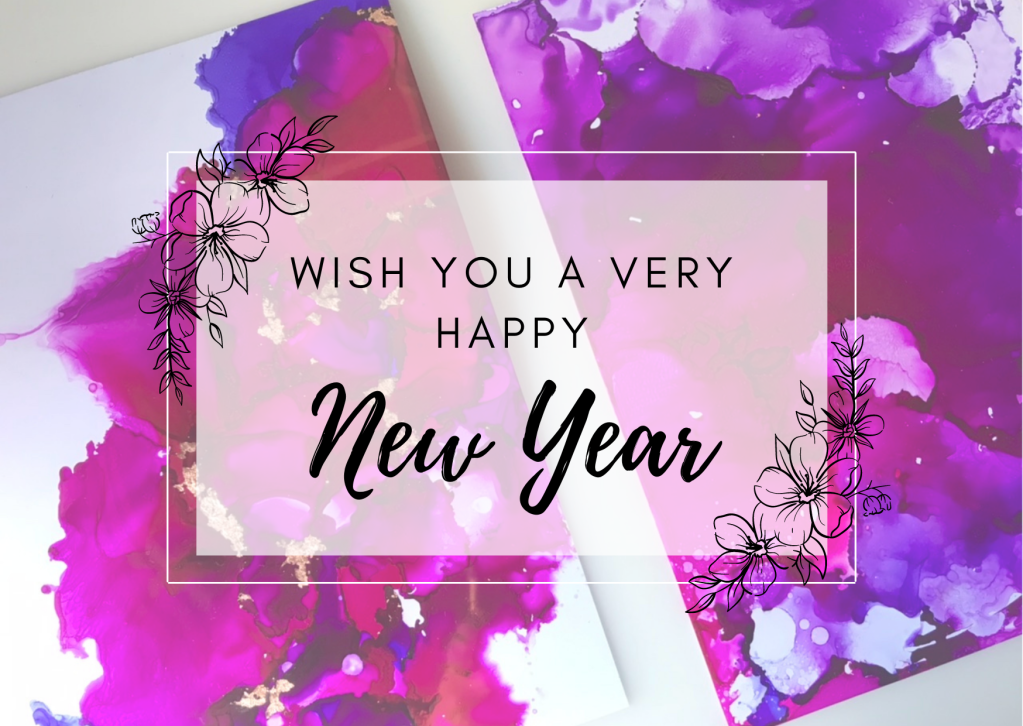
It makes a great background for most surfaces. Products also look good with these designs. Or simple Art Frames with abstract art. How do you plan to use these? Share them in the comments below. I made a card with them to wish all of you a very Happy New Year!

Happy New Year greeting
Greeting using the art as a background image

I am back at my desk after a short break. It means the blog posts will now be regular like before. Will be back with more art and craft ideas. Have an Arty Week!

Selecting colours in Art for their meaning

Learning to paint, this little child asked me “Ma’am why can’t I paint a green or pink sky? Yellow water or black rose? Isn’t art about the freedom to paint?” I was startled for a moment but then I tried to look at it from his eyes. Yes! The artist is free to paint whatever he wants and as he wants. Then why wasn’t I ready to accept his imagination? Did I consider it as a violation of the norms? Why does the sky have to be blue and the trees green? Has this thought crossed your mind too?

Art is about the freedom to express. We all draw and paint to express our thoughts. Worldwide, we associate colours with certain emotions. That is why when an artist paints a red rose it invokes a different reaction and when he paints a black rose it invokes a different one. Why? Because every colour has a meaning. Some meanings are accepted in general on a broader level by most people while some meanings are deeper or secondary and have more local communal interpretations.

For example, red as a colour of love is generally accepted by all. On the other hand red is also the colour of anger. Further, red as an auspicious colour is accepted only by certain communities. So you see one colour can have many meanings. How is this meaning derived? It is mainly because of our associations through our thought process. Colours which we see around in our environment and surroundings are colours we associate better with. Colours as symbols to indicate messages or mark goods in trade have been used since time immemorial.

In India, we have the white desert better known as the Rann of Kutch. Art that is traditional to this location is on a white background, just like the white desert. The locals have colourful dresses to be seen easily. They also have mirrors to reflect the sunlight. They like to use bright colours in their homes and clothing. The colour pigments are made locally by the artisans from materials in their environment. Over the years they begin to associate feelings of happiness and cheer with these bright colours like red, green and yellow. This story holds true in some way or another for art around the world.

A good piece of art is one that conveys the message well. All artworks require a good choice of colours. However, artworks like designs, patterns, abstract art and modern art tend to have a higher dependence on the colours used. Hence before choosing colours for the artwork it is always better to know about colours and their meanings. If you want to appeal to a certain audience, it is always a good idea to know their interpretation of colours.

The study of colours is a vast subject and many people have built careers on it. In this post, we will limit it to the use of selecting colours for drawing and painting – mainly to express ourselves well through our art. Almost all colours will have some meanings and emotions considered as positive and some meanings and emotions considered as negative. Depending on the emotion one wishes to invoke as an artist, one can decide the colours. Then of course there are the light and dark shades – tints, tones and shades for all colours.

There are colours clubbed as warm colours – these invoke a feeling of warmth. Shades on the colour wheel from yellow to red are warm colours. Colours that invoke a cool refreshing feeling in us are termed cool colours. These are the other portion of the colour wheel. What is this colour wheel you are talking about? I have shared it in one of my previous posts. You may want to read up a bit on it as well. It is called ‘Understanding Colours’.

Let’s discuss some colours and the emotions they invoke :

Purity, Innocence, Clean, Fresh, Simple, Good, Complete, New Beginnings.

On the negative side it is symbolic for blank, empty, cold, death or mourning. Secondary meanings include peace, calm and hope. Spiritual meanings like enlightenment or illumination, renunciation or disinterest.

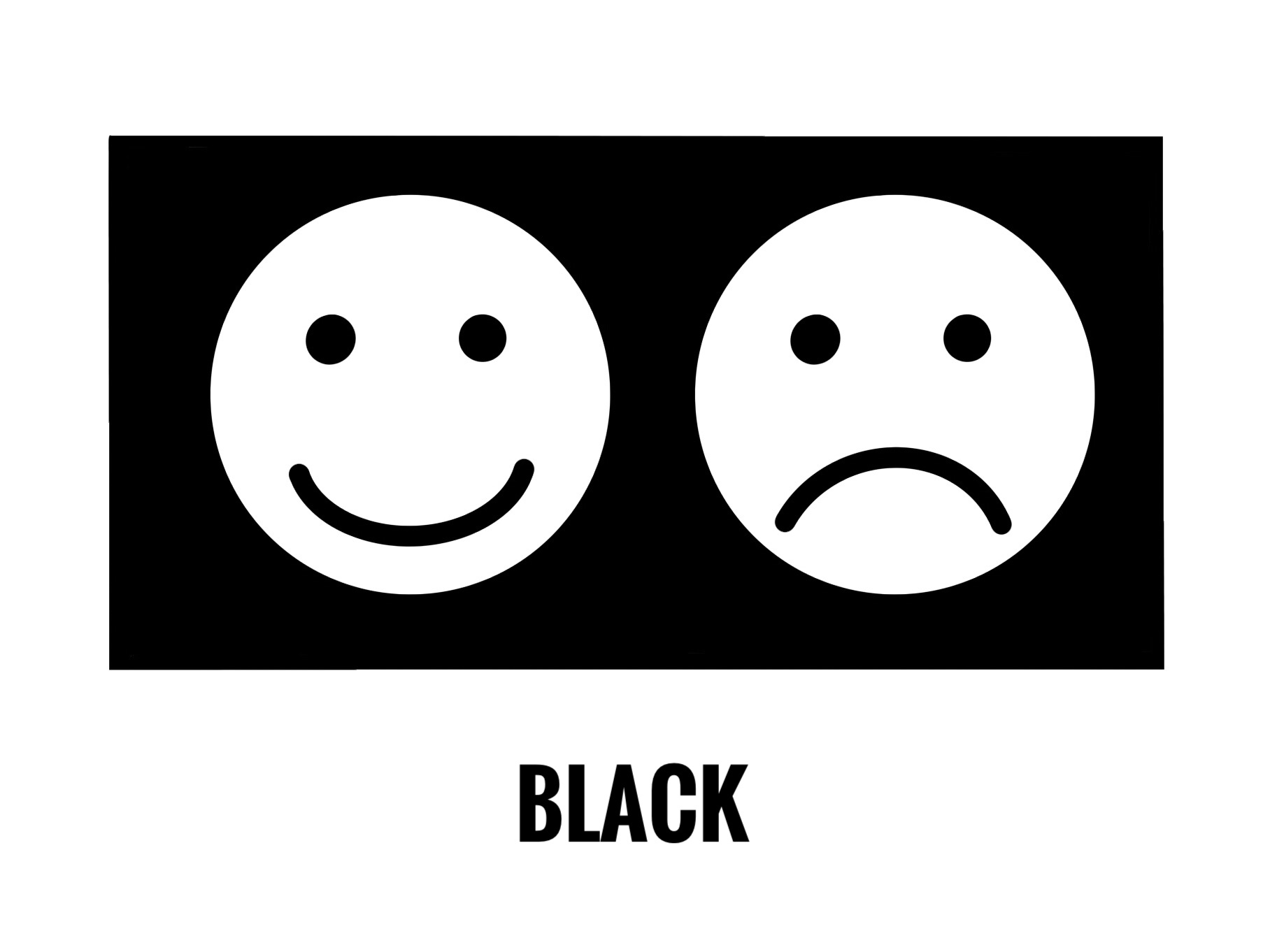
Power, Authority, Strength, Seriousness. Business or Law – Black and White.

On the negative side it is symbolic for dark emotions or opposite of white, sadness, mystery, night, evil, despair. Secondary meanings of sophistication, elegance and formal dressing. It is also the colour of death and mourning in some cultures.

Love, Passion, Fertility, Sexuality, Confidence, Health, Prosperity, Action, Energy.

On the negative side red being the colour of blood it is symbolic for anger, fire, danger, hurt, violence, warfare. Secondary meanings as an auspicious colour in some cultures.

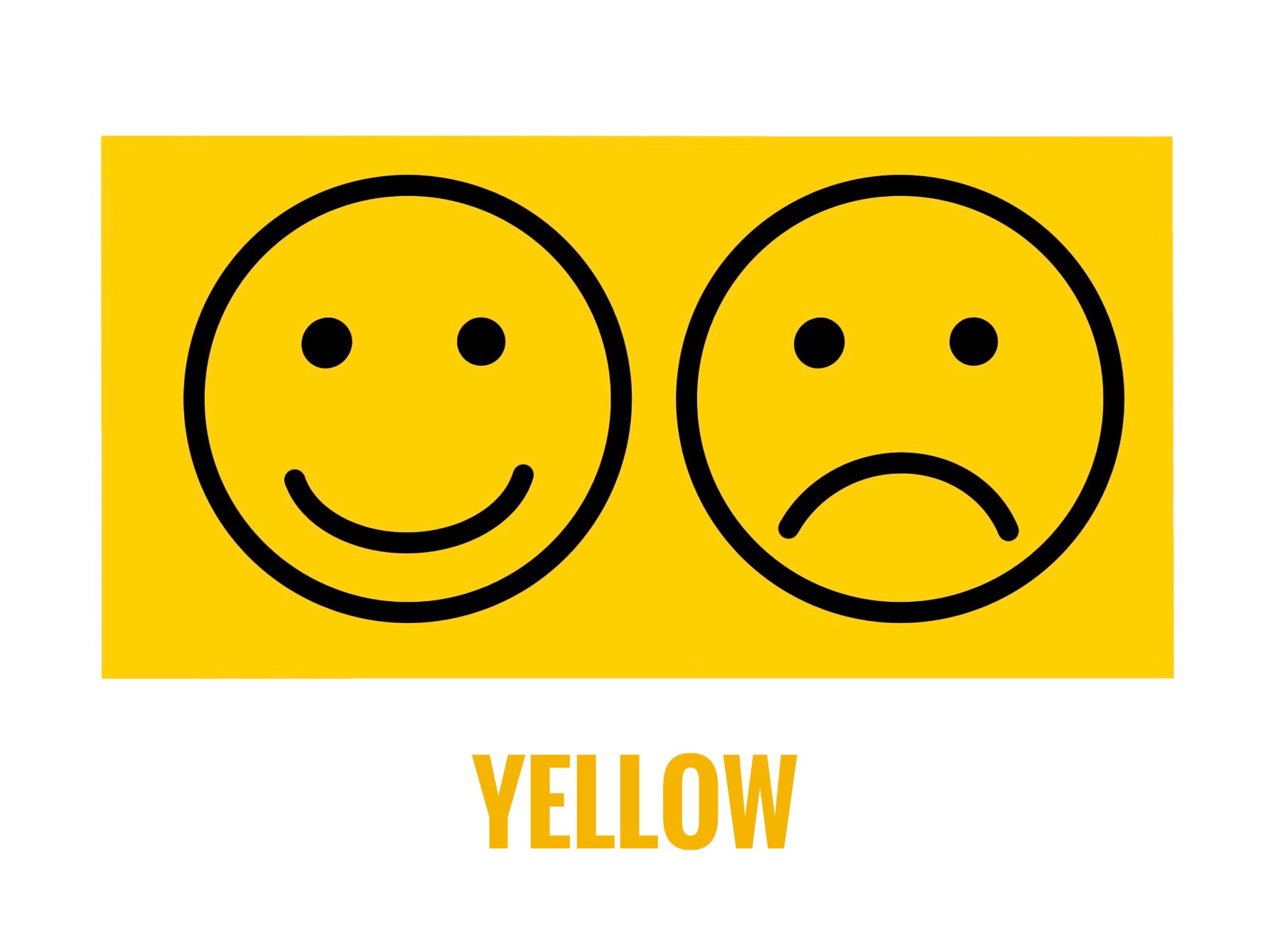
Happiness, Warmth, Sunshine, Brightness, Creativity, Hope, Positivity, Friendship, Knowledge, Laughter, Enthusiasm, Joy.

On the negative side it stands for cowardice, deceit, caution, sickness, illness, Secondary meanings in religious texts or associated with the Sun or god. Yellow is also for Gold.

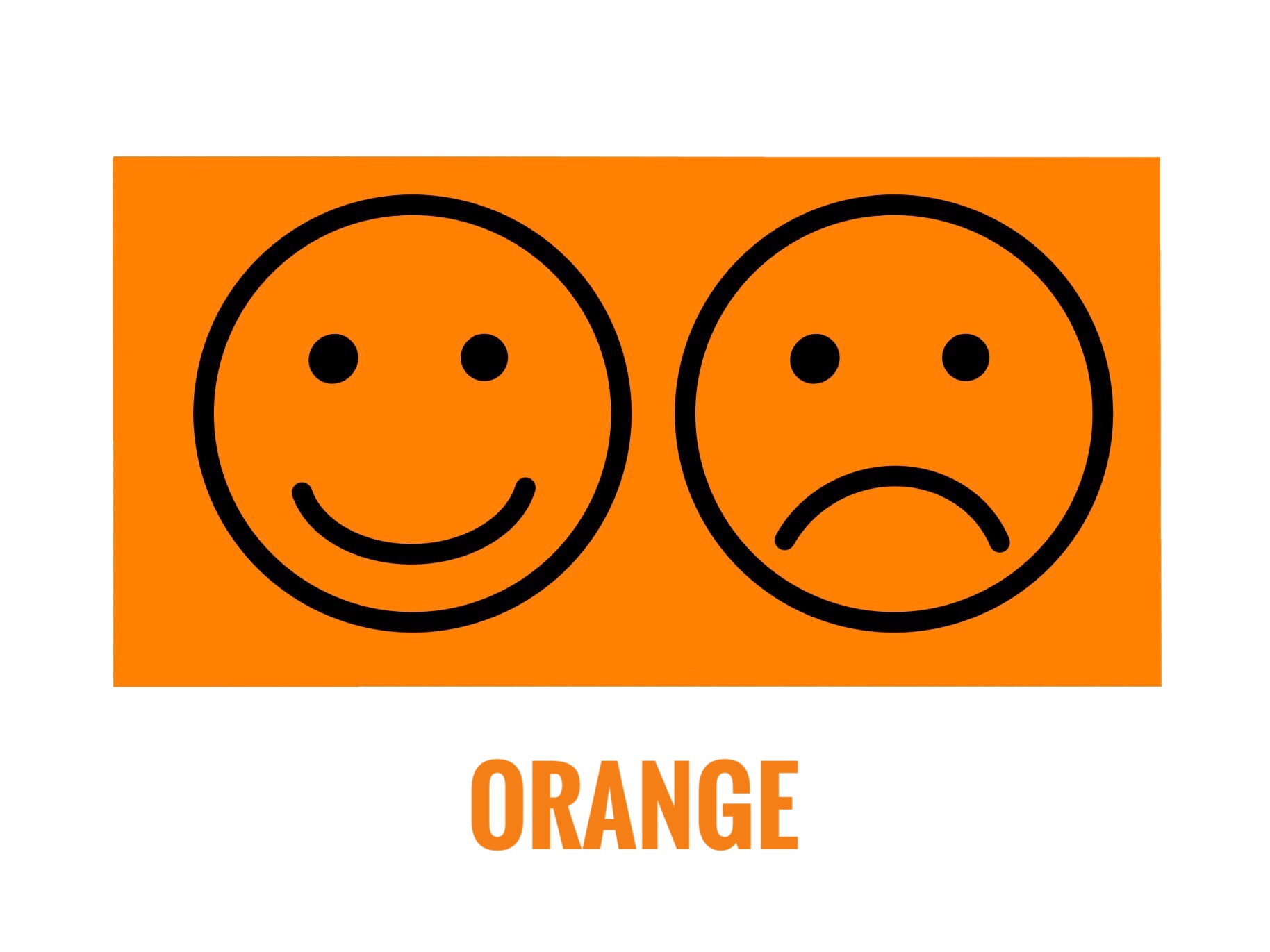
As a combination of red and yellow orange has similar emotions. Joy, Warmth, Sunshine, Energy, Creativity, Health. It is also a colour of movement and change.

On the negative side sometimes considered as superficial, aggressive, overpowering, rude and frivolous. Secondary meanings include its reference to fruits, vegetables or seasons.

Growth, Nature, Earth, Environment, Health, Good Luck, Harmony, Prosperity, Fertility.

On the negative side very often used to show jealousy and greed. Secondary meanings include its association as the colour of money. Often used in symbols for the environment or natural organic products. It is considered lucky in some and unlucky in some cultures. Green is also wisdom in some cultures.

Open Space, Freedom, Imagination, Trust, Loyalty, Intelligence, Wisdom, Flowing or Journey, Serenity, Stability.

On the negative side it means frozen or cold, unfriendly, suspicious, sad and depressed. Secondary meanings : Blue being the colour of the sky and water, it is a very popular colour worldwide. Most companies have their logos in blue. Blue is the colour for boys in some cultures.

Love, Kindness, Femininity, Romance, Youth, Charm, Sensitivity, Politeness.

On the negative side it represents lack of will power, lack of self – worth, over emotional. Magenta is a shade of Pink. Secondary Meanings : It is considered a girly colour.

Royalty, Wealth, Romantic, Wealth, Wisdom, Extravagance, Grandeur, Dignity, Nobility, Power, Independence, Beauty, Femininity,

On the negative side it is associated with pride, pompousness, mystery, sadness, frustration. Different shades have different meanings. Violet and lavender are also shades of purple. Secondary meanings : it is the colour of mourning in some cultures. It is also considered spiritual and magical in some cultures.

We don’t use any single colour for a particular meaning. It is a mix of colours and the shade also matters. How it is used and what is painted influences the message. All countries have different colours that are symbolic to them. For example Green is considered unlucky and associated with infidelity in China while red is considered as protective and lucky. Indigo is referred to as Japanese Blue because it is the most used colour in Japan. Red is auspicious while black is bad luck in Japan.

If we look at flags or national symbols of a country, we will understand their colours faster. Countries use colours they consider auspicious or representative of good luck on their flags. There is no one shoe fits all situation. We need to do our own homework and read up our bit.

The next time you are drawing or painting, think about the colours you are selecting. This is not an exhaustive list. You could even make your own list. I shared this because I felt just as this knowledge helped me make my art better, it could help you too. Have an Arty Week!

Year in a Review

In the Holiday mood, I am also going to take a break next week. Most people have already signed off till New Years. As a shop owners, we are busy making products, posting on social media, settling accounts, packing, shipping and making new and the cycle continues year round. That makes us use our phones for long hours at work. A little digital detox to spend time with yourself, family and nature can rejuvenate us.

My Desk
My Desk! It’s Christmas 🎄

And we can come back in the New Year refreshed and charged up for another year ahead. Many people also use this time to upgrade their skills, read up on books they always wanted to. I started my Blog this year in September 2020. I have 17 Posts by now. The response to the Blog has been overwhelming. It’s been a good journey with your love, support and encouragement.

So I thought I would do this year in a review post. Helps me connect with the new followers too! Here is a list of the posts I have done on Arts and Crafts so far. You may click on the title to go to the post. All these are listed on my Blog page – ‘The Art Life’

So just in case you missed out on reading any of them, you still can. Please note the Blog page shows only the last 10posts and so to see the previous ones you may use the links above or scroll to previous posts.

If you like reading my posts and wish to continue our association, you may click follow or subscribe to the Blog. This will make the posts come to your Email Inbox and you may read them at your convenience.


Wishing everyone a Merry Christmas and a Happy New Year!

December Calendar with a Christmas Wreath that I created Digitally

This is an Instant Digital Download (JPEG) File that can be purchased at my Etsy Shop NMARTWORKS Picture Format opens with any Photo Editing Software. Once you pay, you can instantly download and use.

Three Arts that you can give a try – Doodle Art, Zentangle Art and Mandala Art

It’s been tiring juggling work from home alongside family and home responsibilities. The last few months have been difficult for all of us. We need activities to do individually or as a family. Something to refresh and take a break. In the process if we get to learn and grow, it would be a bonus – right! Stepping out is a big No-No. That leaves us with very little to do apart from the mundane daily tasks. In this article I am sharing three Arts that I feel everyone can give a try! Doesn’t need any prior training or experience and are very popular.

These are my top three because; Materials required for these would be easily available at home. In case you wish to purchase the material locally or online, it is standard and easily available. The selection is quite simple and specific. Another reason I like these is because there is no right or wrong here, just beautiful Artworks. They don’t have to look like anything or have any logical sense. Loads and loads of free online tutorials and reference material is available. Further all of them help de-stress, develop creativity, improve skills and most importantly give a sense of accomplishment – a feeling of having created something. It builds confidence, develops brain power and directly or indirectly keeps one more joyful and happy.

So here is my list :-

1) Doodle Art : All of us would have tried drawing something at some point of time. Whether it was good or bad doesn’t matter. Without making a conscious effort or scribbling while your mind is pre occupied with something else is called ‘Doodling’. The Art is called ‘Doodles’ or ‘Doodle Art’. It can help express emotions. I scribble cute animals, flowers, hearts, stars and anything else that comes to my mind in my notebooks. These were my school, then university and even office notes and not drawing books. I memorised the data with the help of those diagrams. Making doodles on otherwise boring black white pages helped me do a recap of the matter on that page. In the exam we can draw these on the rough page or if it is a fair diagram, representing it graphically gained me extra marks for the answers.

Leaves Doodle Art
Leaves Doodle Art – My scribbles

Even today when I do brainstorming for ideas, I scribble it in my notepad. I do post my midnight scribbles on social media. Emojis, Infographics and Designs are some of the applications that come to my mind. It is continuously drawing whatever comes to your mind without a logical explanation or making sense out of it. Many people often mistake it with hand drawn Art. It requires only a pen and paper. For the first time we can search the Internet to make a beginning somewhere. Draw anything you like or connect with. It will not look the same. Big ears, small eyes everything is allowed. It is your art and you decide how you want it. It is all good as long as you like it.

Zentangle doodle Art
Zentangle and Doodle Artworks that I have done

3) Zentangle Art : Patterns or Designs made by repetitive lines or curves. These are used to fill objects. We don’t need to know shapes, shade and light, perspective or any other information about drawing. For the first one,draw small equal squares using a ruler and pencil or pen on your paper. Keep a constant white border between these squares. Then draw any combination of dots, lines and squares to create patterns or designs. A simple challenge to make it interesting would be to make sure no two patterns on this page are exactly the same. They can be similar. Here again these are designs and fills. There is no need for it to look correct or real. Each piece is a work of Art. I once did these patterns on a sheet of paper, removed photocopies or prints of the Art, laminated it and used them as placemats for my home. I have made bookmarks with these too.

Mandala Art
My Mandala Art

4) Mandala Art : Mandala Art has religious significance and origin. However often people just refer to a circular pattern when they say Mandala Art. One can try this Art without any connection to the religious beliefs – just as a random circular geometric pattern. To draw this we would need a pencil, a pen, paper and measuring tools to make a grid. If you wish to make it colourful you can use colour pencils and coloured pens of your choice. We need to prepare a grid using a compass, protractor, ruler and pencil. After this there are a million permutation combinations or possibilities resulting by connecting the intersection points of the grid using lines and curves through repetitive patterns. There are patterns and designs and represent nothing otherwise. I draw a lot of these both by hand and digitally. They are considered therapeutic. Can be used to decorate different things as well.

Mandala Art
Mandala Art with white pens on black paper – Reverse

If we look carefully we will find so many patterns by Mother Nature. The number of possible combinations in patterns and designs are so vast that one can definitely find a few strokes that are easy and manageable. The Artwork can be a combination of these. There isn’t any need to follow any specific rules to classify the Art as just one of them. Many people use the terms interchangeably also. I have a lot of practice and training in these but I am sure even beginners will be able to do a pretty good job. There is nothing like right or wrong here. I understand it is difficult to know where and how to begin with when it is the first time. As we do more, our hand or our strokes develop and we grow. Keep your first piece next to something you made after a few months of practice and you will notice your growth.

DIY Zentangle  Art
DIY Zentangle Bookmark Pattern
DIY Mandala Art
DIY Mandala Art with grid making

Apart from the above, the one important thing that you will definitely need is your zeal and enthusiasm for Art. The idea was to introduce these and develop your interest in them. I hope I managed to interest you enough, so that you look up and give the Arts a try. These Arts require focus and patience. So to begin with I would suggest selecting simple projects. I have shared two DIY projects you could try. I have purposely kept them naturally imperfect to show that it doesn’t really matter. The only thing that matters is : You enjoy! Have an Arty Weekend!

‘Healing with Art – Art Therapy’ by Guest Blogger – Dr.Wilona Annunciation (MD)

Art is something that makes you breathe with a different kind of happiness.’Anni Albers

I cannot describe the emotions that Art stirs up in me! The eager anticipation of what I would take up for that Art experience, the planning for how to go about it, the gathering of supplies, the actual creation of the artwork and finally the feeling coursing through me, when I complete the piece and sit back to admire and critique what I have done! I have spent so many happy, excited, enthusiastic, unexpected, doubtful, confused, irritated, impatient moments that I have grown through each of my brushes with Art! And so, as a Psychiatrist, I find it absolutely intriguing the way people emote and express through their artistic creations.

Artworks by Dr. Wilona Annunciation

While Art began to be used in treatment as a form of Therapy as early as 1942, it started off more as a form of Catharsis for patients suffering from Tuberculosis. So as to “build up a strong defence against their misfortunes”. In mental health, Art as a form of Therapy has now evolved and come a long, long way from those early days. Today, Art based Therapists work in sync with Psychiatrists, Occupational Therapists, Remedial Educators and other Mental Health Professionals to ensure a holistic recovery of their patients.

As a young psychiatry post graduate, I was trained thoroughly in basics like history taking, mental status examination, criteria for diagnosing disorders and the medical treatment options. However I often found, that while my patients did well and improved with medicines, there would be a pause when I asked, ‘Do you feel your life is back to the pre disorder levels?’. Often patients said that they were definitely better but something was missing and another doubt that kept nagging me was, how do I help them prevent further episodes! Once I started my private practice, I actually realised the advantages that effective therapy brought to patients and I found myself encouraging patients to look at the combination of medications and therapy as the best possible mental health solution.

Over the last 10 years in Mental Health, I have seen a good number of my patients, struggling with the concept of expressing themselves in words. And here, for some, Art has been the saving hope. I have had children emote through their Doodles, teens struggling to talk about what they are experiencing draw Graphic Images, Images of their thoughts, young adults express their rage though Colours, middle aged persons showcase their anxieties through Art and elderly describe their hope in the change in their Patterns of Drawing. And this has helped me modify the medications to help them improve their quality of life.

I have been fortunate to work with an excellent Arts Based Therapist who has taught me some valuable lessons which have translated into my work and personal life. One of these was that there are no mistakes in art, only opportunities. Such a beautifully empowering idea, isn’t it? It makes you ponder about the pressure we put on ourselves not to make a mistake, but in Art every mistake is an opportunity to redefine whatever we are showcasing and an invitation to make it our own creation. This thought has made me so much kinder to myself, because I would often criticise myself if there were mistakes. In the pursuit of perfection, I would lose my sense of appreciation for what is. I am now more mindful of that.

I now look at Art Therapy as a valuable tool I can offer patients who are so inclined, to be expressive, to vent emotions and to reflect and meditate on their own goals and honestly, I have seen some wonderful transformations! Whether it is making Art or viewing others Art, this form of Therapy, believes in the expression of creativity as a means of fostering, healing and promoting recovery from some serious mental health concerns. I have seen it at work in patients with anxiety, depression, personality disorders, sleep cycle disorders and PTSD. It can be used alone or in conjunction with other forms of therapy like CBT, group therapy or the gestalt approach to bring about an increased self-awareness and shift towards self-development in the patient. But it is hard work and it requires dedication. Just like any other change you want to bring permanently in your life, whether it is healthy eating, regular exercise, better sleep hours, mental health through Art Therapy will require your motivation and commitment.

If you feel, this might be the approach for you to address your mental health concerns or goals for self-development, do consider reaching out to an Arts based Therapist. You will need someone who has studied both Psychology and Arts based therapy to work with and you may need to speak to the person before you decide the fit, but do reach out! We are in difficult times and in the process of making sense of our struggles. We may need a helping hand and it is completely ok to ask for it.

Artwork by Dr. Wilona Annunciation

Dr. Wilona Annunciation

For me personally, Art is a wonderful medium to just be ME! Imperfect, Vulnerable yet Beautiful!

Dr. Wilona Annunciation (MD) Consultant Psychiatrist at ‘Institute for Psychological Health’ & ‘Prafulta: Center for Psychological Wellness’